AEO: What Is Answer Engine Optimization and How to Measure It (2026 Guide)
AEO makes your site readable and citable by AI answer engines like ChatGPT, Perplexity, Gemini, Claude and Google AI Overviews. Here's what it is, why it matters right now, and how to measure it without taking the first score a tool shows you at face value.

This is an operational guide. I'm writing it from the perspective of someone building a tool to measure AEO, so you'll find little theory and plenty of numbers, always with the source stated. The goal is to understand what AEO is, why it matters now, and how to measure it — without taking the first score a tool puts in front of you at face value.
What is AEO (Answer Engine Optimization)?
AEO is the set of techniques a business uses to increase the probability of being cited as a source in AI-generated answers. When a customer asks ChatGPT "what's the best practice management software for a dental office," the AI doesn't return ten links: it returns two or three names. If yours isn't one of them, you're out of the game for that customer — even if you rank #1 on Google.
Classic SEO brings the user to your site when they search. AEO acts one step earlier, at the moment the AI decides who to recommend. The two coexist, but they answer different questions, and in the next sections we'll see why keeping them separate changes how you invest time and budget.
AEO, SEO and GEO: what's the difference?
Three acronyms that travel together, and the confusion is legitimate. This table lays out the operational distinction.
| Discipline | Goal | Where it acts | Key metric |
|---|---|---|---|
| SEO | Rank a page in search results | Google, Bing | Position, clicks, organic traffic |
| AEO | Get cited as a source in AI answers | ChatGPT, Perplexity, Gemini, Claude, AI Overviews | Citation frequency, share of voice |
| GEO | Optimize for generative engines (umbrella term) | Generative systems in general | Variable, often overlapping with AEO |
An honest note on "GEO." Generative Engine Optimization is the term agencies are riding hardest right now, and it's also the vaguest. The more serious side of the SEO community has already put it under a critical lens, calling it a buzzword sold as a magic box. We talk about measurable AEO because "GEO" describes an aspiration without saying how you verify it, while AEO lets itself be measured. If someone pitches you "GEO" without showing you how they measure the result, ask for the numbers before you sign.
Why AEO matters now: the data
The right question isn't whether search is shifting to AI, but how fast. The 2026 numbers are explicit: AI platforms generated 1.13 billion referral visits in June 2025 alone, up 357% year over year, and in the first five months of 2025 AI referral sessions grew 527%. It's the fastest-growing traffic source on the web.
The figure that should make every SEO professional pause, however, is a different one: ranking on Google does not guarantee being cited by AI.
| What the data measures | Value | Source |
|---|---|---|
| Pages ranking #1 on Google that ChatGPT cites | 43.2% | AirOps, Mar 2026 |
| Citation probability for a page in position #1 | 58% | Growth Memo, Apr 2026 |
| Citation probability for a page in position #10 | 14% | Growth Memo, Apr 2026 |
| Overlap between Google rankings and ChatGPT citations | 11–12% | QuickSEO, 2026 |
| Top ChatGPT-cited pages with zero Google visibility | 28.3% | QuickSEO, 2026 |
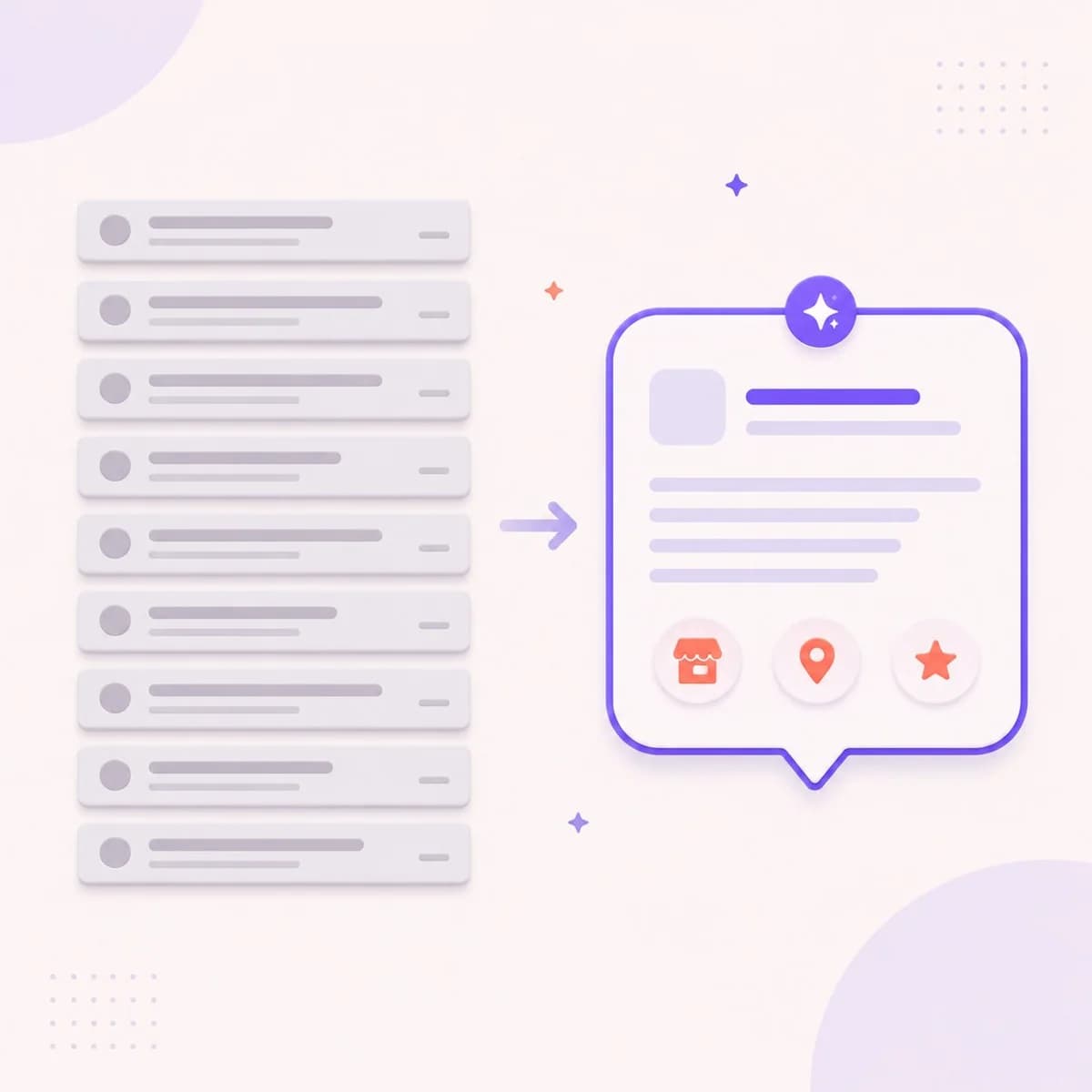
The overlap between ranking #1 on Google and being cited by ChatGPT stops at 11–12%, and 28.3% of the pages ChatGPT cites most have zero Google visibility. They're two games won with different rules: you can be nearly invisible on Google and show up constantly in AI answers, or the other way around.
Then there's the question of traffic value. Traffic arriving from AI converts at 14.2% versus 2.8% for organic Google, and ChatGPT generates roughly half of all AI traffic. Google AI Overviews now appear on 48% of searches (March 2026) and cut organic click-through by 61% — but brands cited inside the AI Overview get 35% more clicks than those left out. Despite all this, only 22% of marketers are actively monitoring their AI visibility. That's where the margin is: most businesses don't even know whether AI recommends them.
Why your site is "invisible" to AI
A site can be perfect to a human eye and unreadable to an answer engine. AI assistants don't browse like we do: they don't scroll, they don't click, they don't interpret a visual layout. They read structured data and text organized so that verifiable statements can be extracted from it.
When an AI builds an answer about a brand, it does what we might call a high-speed reputation audit: it analyzes how often the brand is mentioned in its industry, the sentiment of those mentions and the authority of the sources, then assigns a confidence level based on the quality and frequency of citations. Digital consensus matters a lot: if Wikipedia, an industry publication and a specialized blog all describe a brand the same way, the AI adopts that consensus as fact.
For a small business this is good news, because most of it depends on you. 86% of the citations AI engines make about brands come from sources the business controls directly: its website, local listings and reviews (Yext, analysis of 6.8 million citations, October 2025). You don't need to be a giant — you need a digital presence that's consistent, structured and up to date.
The signals that get you cited
The 2026 data shows fairly clear patterns in what AI rewards. In order of impact:
- Content structured to answer questions. Headings that are questions, a direct answer in the first two or three sentences, FAQ sections. AI extracts better from those who answer immediately than from those who circle around.
- The right format. Lists get cited at a 25% rate versus 11% for blog posts and opinion pieces, and "best," "top" and "vs" content generates the highest AI traffic.
- Citable, verifiable data. Numbers with sources, dates, precise statements. An AI cites more willingly what it can attribute.
- Schema markup. Structured data tells the AI what you are, what you offer and where. It's technical SEO that becomes AEO.
- Distributed authority. Consistent mentions across third-party sources, reviews, presence on platforms the AI considers trustworthy. A brand cited by multiple authoritative sources enters the digital consensus.
- Freshness. Content updated on a regular cadence. A refresh every 90–180 days on your most important content keeps the brand "alive" for the models.
One point that often surprises people: classic SEO remains the foundation. Good traditional SEO accounts for 77% of AI visibility. AEO doesn't replace SEO — it extends it.
The problem with AI visibility scores
Now for the part I care most about, because it's the reason I built CiteProof.
There are already tools that give you an "AI visibility score," and nearly all of them share the same flaw: they show you a number that goes up even when you haven't changed anything real. Add a page, tick a checklist item, the score grows — but nobody verified that the change actually altered how the AI sees you. It's a score that measures good intentions more than results.
There's also a technical reason measurement is hard. Anthropic crawls 13,528 pages for every single referral it sends, OpenAI is around 1,252 to 1, and Perplexity 95 to 1 (Cloudflare Radar, April 2026). Most of what AI reads about you leaves no trace in your analytics, and Google Search Console will never tell you whether ChatGPT recommends you. You need a separate measurement layer.
CiteProof starts from a simple, slightly stubborn principle: the AI Visibility Score goes up only after a verification confirms the change was applied and is readable by AI. Not when you tick a box — when the Verify Bot re-checks the source and confirms the fix is live. It's slower and less gratifying than a number that grows instantly, and it's also the only score that still means something when you look at it three months later.
If it isn't verified, it doesn't count. The score doesn't measure what you promised to do — it measures what's actually live.
CiteProof's AI agents do this work for you
They monitor whether AI cites you on ChatGPT, Perplexity, Gemini, Google AI and Claude, find what's missing (schema, FAQPage, LocalBusiness data, llms.txt) and fix it. The Verify Bot confirms every fix before raising your AI Visibility Score: no inflated numbers, only real progress.
No signup required for the initial scan.
How to start with AEO: an operational checklist
A concrete sequence to get going, no paid tools required for the first steps.
- Build a manual baseline. Take 20–30 questions a customer would ask an AI to find a business like yours. Ask ChatGPT, Perplexity, Gemini and Claude, and note whether you appear, where, and who appears instead of you. If you don't want to do this by hand for every engine, it's exactly what CiteProof's agents automate.
- Identify the competitors AI actually cites. They're your real benchmark, not the ones you imagine.
- Fix the sources you control. Website, local listings, reviews: 86% of citations come from there.
- Restructure your key content. Question headings, a direct answer up front, FAQs with schema markup, data with sources.
- Create content in the formats AI rewards. Guides, comparisons, lists. Less self-celebration, more useful answers.
- Repeat the audit every 30–60 days. AEO isn't a one-off project, it's maintenance — and it only makes sense to measure what you can verify.
Frequently asked questions about AEO
What is AEO in simple terms?
It's making sure your business gets named when someone asks a question to an AI like ChatGPT or Perplexity, instead of just appearing among Google's links.
Are AEO and SEO the same thing?
No. SEO ranks you in search results; AEO gets you cited inside AI answers. They complement each other, but the overlap between the two is only 11–12%: ranking #1 on Google doesn't guarantee being cited by AI.
Is AEO worth it for a small business?
Yes — arguably most of all. 86% of AI citations come from sources the business controls directly, and the models reward specific expertise over brand size. A well-structured small business can get cited more than a big generic portal.
How do I know if ChatGPT cites my brand?
The most reliable way is to ask targeted questions across the various assistants and check the cited sources. Google Search Console doesn't cover this data, so you need dedicated, repeated measurement over time to read the trend. CiteProof's agents do it automatically across all five platforms.
How long does it take to see results with AEO?
The first signals typically appear within 60–90 days, but it depends on your starting point and the consistency of your work. The trend over time matters more than any single data point.
Should I abandon SEO to do AEO?
No. Classic SEO accounts for roughly 77% of AI visibility. AEO extends it — it doesn't replace it.
Find out where you stand, then let the agents do the rest
You can't improve what you don't measure. Start with the free scan to see whether AI cites you today, then activate the agents to monitor and fix automatically — every fix verified by the Verify Bot.
Measurable AEO. No unverified promises.
CiteProof tracks your brand's visibility across AI answer engines and tells you what to change to get cited. With one rule: the score only moves up after the Verify Bot confirms the fix is actually live.