LLM Traffic Converts Better Than Organic: ChatGPT, Perplexity, Gemini Data
ChatGPT converts at 15.9%, Perplexity at 10.5%, Google organic at 1.76% in Seer Interactive's GA4 case study. A verified reading of LLM referral conversion data, where it holds, where it does not, and what it means for your funnel.
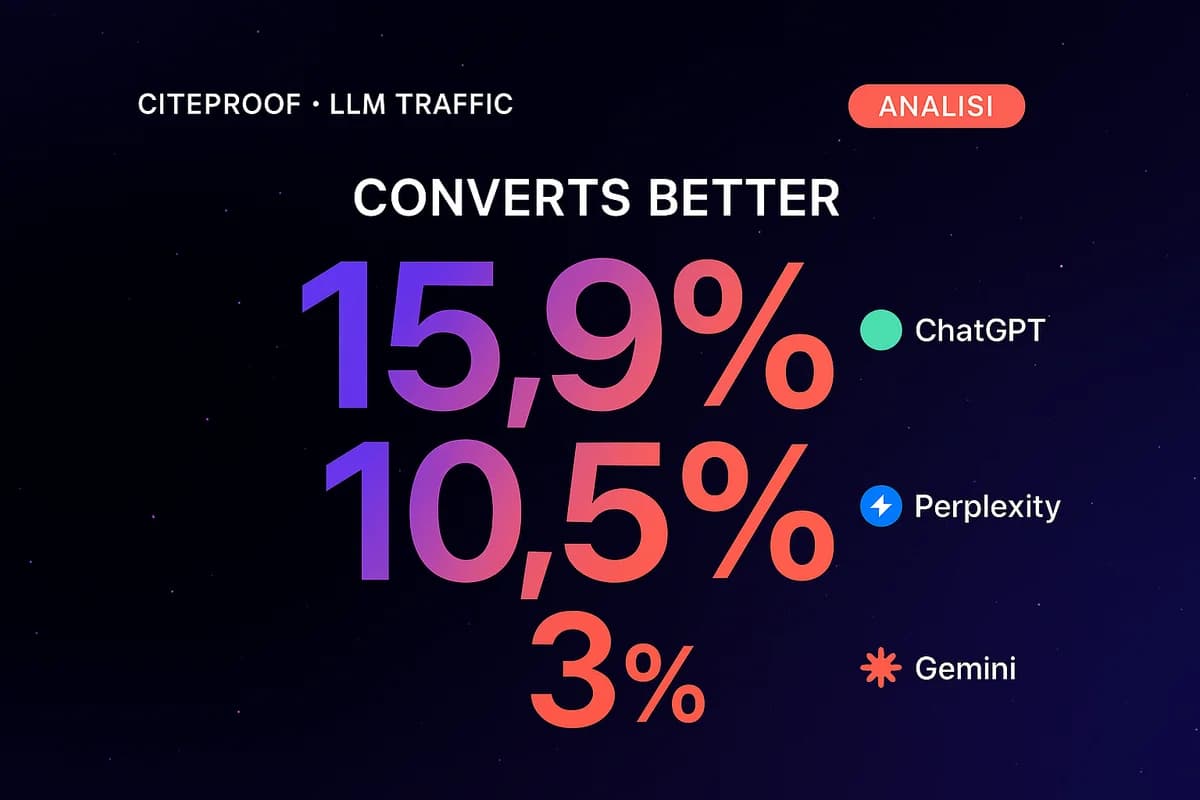
Traffic referred by ChatGPT, Perplexity and other assistants converts several times better than Google organic on B2B and lead-generation sites, because the comparison happens inside the chat before the click. In low-consideration ecommerce the premium shrinks or disappears.
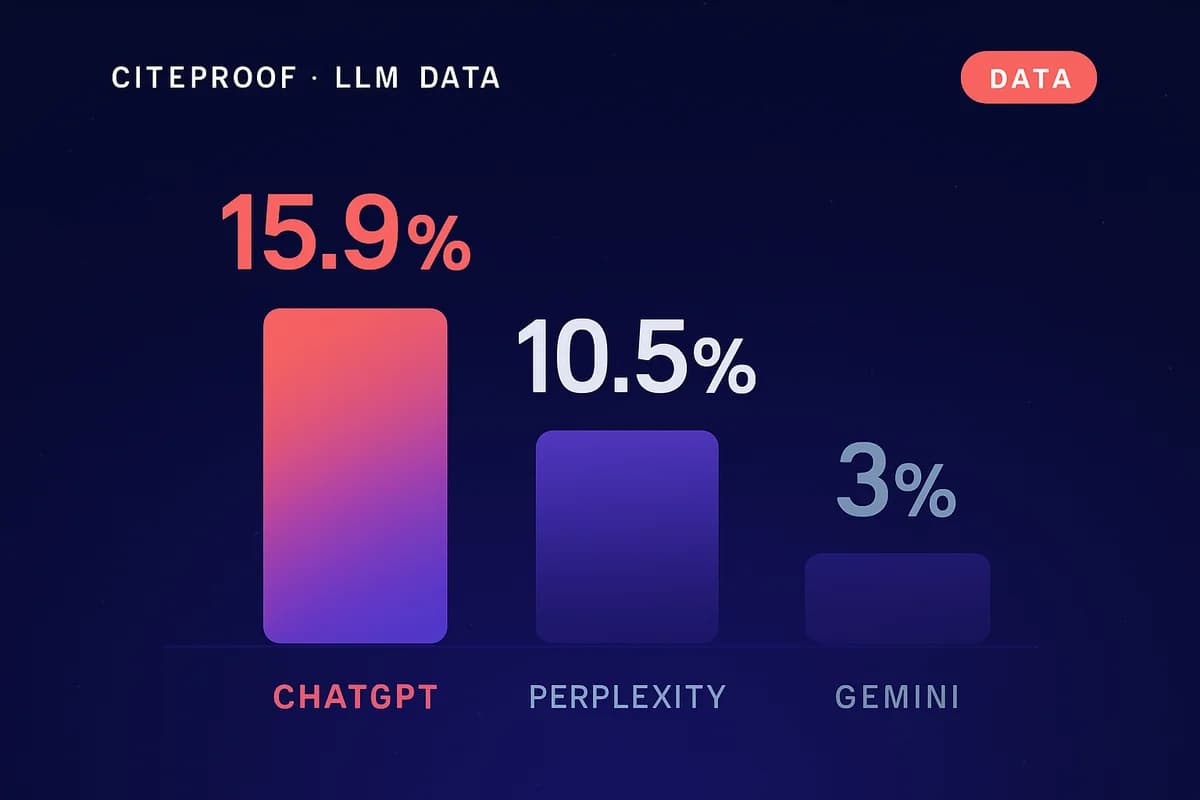
- In Seer Interactive's GA4 case study (one client, October 2024 to April 2025), ChatGPT referrals converted at 15.9% and Perplexity at 10.5%, against 1.76% for Google organic [1].
- Across 1,200+ publisher and news sites measured by Microsoft Clarity, visitors from LLMs signed up at 1.66%, against 0.15% from search [2].
- On Ahrefs' own site, AI search sent 0.5% of visitors and 12.1% of signups, a 23x conversion rate [3].
- The counterpoint: across 973 ecommerce sites, ChatGPT referrals converted below every traditional channel except paid social [4].
- What to measure: the conversion rate of a dedicated "AI Search" channel group in GA4 against organic, after fixing referral attribution and excluding internal-search landings.
Across the sites connected to CiteProof, every 100 AI crawler visits bring 0.2 human visits clicked through from ChatGPT, Perplexity, Claude or Gemini. (CiteProof data, n = 1,272 visits, October 10, 2026 · All the numbers)
Here is a number that should make any growth-focused marketer pause: 1.76%.
That is the conversion rate for Google organic search traffic in the Seer Interactive dataset covering October 2024 through April 2025. Now here is the number next to it: 15.9%. That is the conversion rate for ChatGPT referral traffic in the same dataset, same client, same goals tracked in GA4 [1].
Not a 15% relative improvement. Not a rounding difference. A 9x gap.
And yet most marketing teams are not running a single experiment on AI citation strategy. They are responding to flattening organic traffic by writing more blog posts optimized for keywords that Google's AI Overviews now answer directly.
This article is a close reading of the available conversion data across ChatGPT, Perplexity, Gemini and Claude. Every figure links to its source at the bottom, with the date I last checked it; what I could not verify at the original source, I cut. The goal is not to generate excitement about AI. The goal is to help you determine, with the evidence available in 2026, whether your team is systematically underinvesting in the highest-converting acquisition channel in your funnel.
The short answer: LLM referral traffic, the visits that arrive from ChatGPT, Perplexity, Gemini and Claude, converts at significantly higher rates than Google organic search on sites where the purchase takes deliberation. The Seer Interactive case study (GA4, October 2024 to April 2025) measured ChatGPT at 15.9%, Perplexity at 10.5%, Claude at 5% and Gemini at 3%, compared to 1.76% for Google organic [1]. These figures are not universal: they are vertical-dependent, study-dependent, and influenced by how well your GA4 setup actually tracks AI referrals. The premium is real. Its size depends on your context.
Where the Numbers Come From, and What They Actually Measure
Before building strategy on top of any conversion figure, you need to understand what each study actually measured.
The most-cited data point in this analysis, ChatGPT converting at 15.9%, comes from a Seer Interactive case study published in June 2025. The data covers a single Seer client, tracked in GA4 between October 1, 2024 and April 30, 2025. Google organic came in at 1.76% across the same period, Perplexity at 10.5%, Claude at 5% and Gemini at 3% [1].
Source: Seer Interactive, case study on a single client, GA4 data from October 1, 2024 to April 30, 2025 [1]
A separate but directionally consistent data point comes from Microsoft Clarity, which analysed more than 1,200 publisher and news websites over eight months in 2025. In that dataset, visitors from LLMs converted to sign-ups at 1.66%, compared to 0.15% from search, 0.13% from direct and 0.46% from social [2]. The absolute numbers differ because the conversion event differs, a newsletter or account sign-up on a publisher site is not a demo request, but the relative premium is structurally similar: LLM traffic outperforms every other channel.
Source: Microsoft Clarity, eight months of data across 1,200+ publisher and news websites, published November 2025 [2]
Ahrefs published a third data point that is worth examining carefully. On its own site, over the 30 days before publication in June 2025, 0.5% of visitors arrived from AI search and drove 12.1% of all signups, which Ahrefs reports as a conversion rate 23 times that of traditional organic visitors [3]. Again, absolute rates differ by site, by offer, by goal configuration. The ratio, AI traffic punching far above its session weight, is the consistent signal.
Now the counterpoint, because this analysis would not be honest without it.
A study by Maximilian Kaiser (University of Hamburg) and Christian Schulze (Frankfurt School of Finance & Management) of 973 ecommerce sites with a combined 20 billion dollars in annual revenue, covering August 2024 through July 2025, found that organic ChatGPT referral traffic underperformed every traditional channel except paid social on conversion rate, average order value and revenue per session [4]. Adobe's retail analytics point the same way: in Adobe's March 2025 report, visitors arriving at US retail sites from generative AI sources were 9% less likely to convert than other traffic, an improvement from 43% less likely in July 2024, with the weakest AI conversion in apparel, home goods and grocery and the strongest in electronics and jewelry [5].
These findings do not contradict the B2B data. They refine it.
The reason the same traffic source produces radically different outcomes in different verticals comes down to one structural factor, which the next section explains.
Why LLM Traffic Converts: The Consideration Phase Has Already Happened
When someone types a question into ChatGPT, "What ATS should a 200-person company use?" or "Which enterprise firewall vendors are worth evaluating?", the research does not begin when they land on your site. It happens inside the conversation. They ask follow-up questions. The model narrows options, explains trade-offs, flags limitations. By the time they click an outbound link, the consideration phase is largely complete.
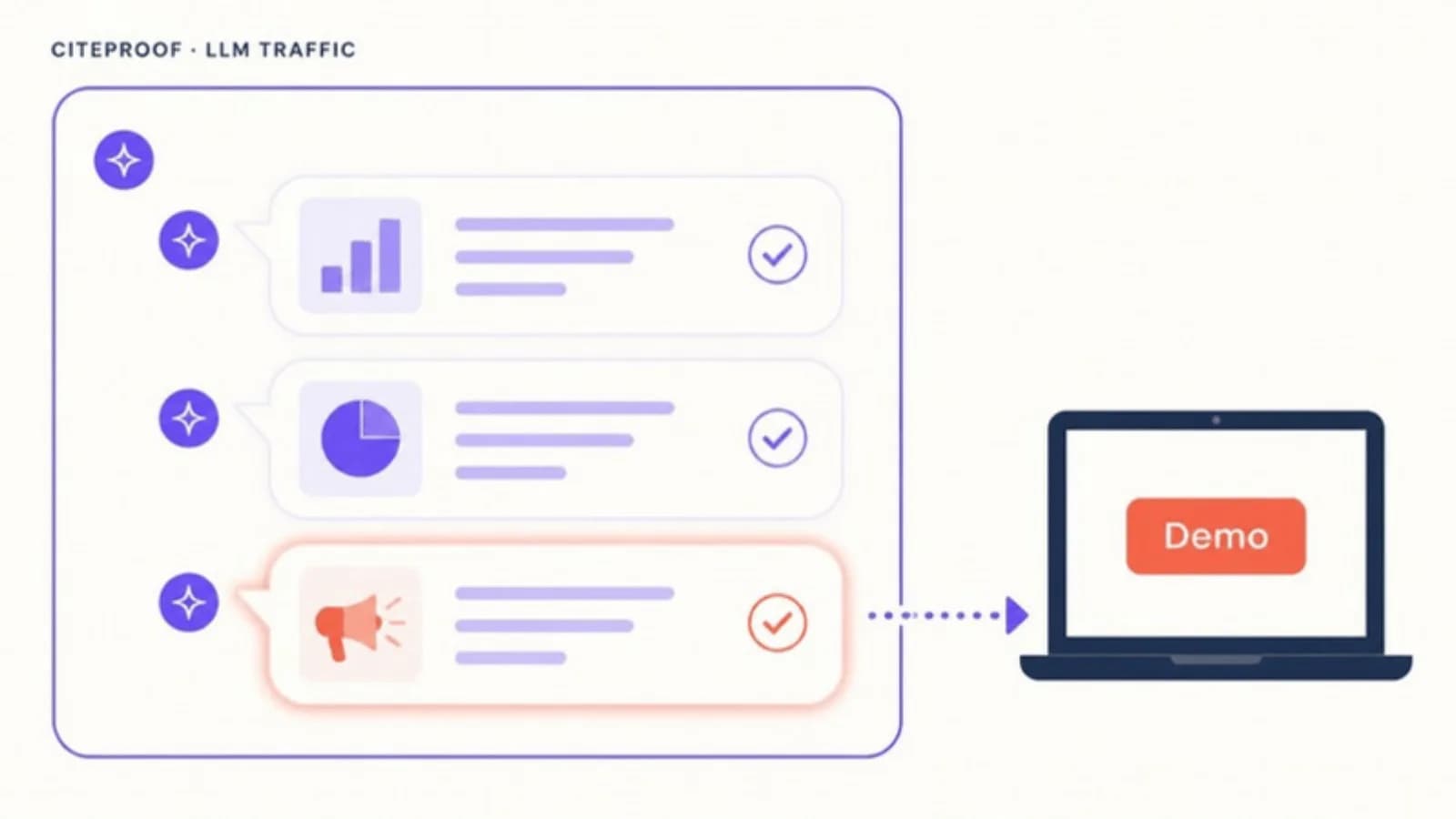
The comparison work that used to happen across ten Google tabs happens inside the assistant. The site receives the buyer at the end of it.
The click is confirmation, not exploration.
This structural difference explains everything. A user arriving from Google organic is often in the middle of their research. They are evaluating whether your page is relevant. They may leave immediately, return later, or never convert. An AI-referred visitor has, in many cases, already been told that your product or service is relevant to their situation. They arrive with a decision framework already formed, and they stay: across 101,574 websites analysed by SE Ranking between January 2025 and April 2026, visitors arriving from AI platforms spent 67.7% more time on site than visitors from organic search [14].
This dynamic matters far more in high-consideration purchases, enterprise software, professional services, financial products, healthcare decisions, than in low-consideration transactional commerce. A buyer researching which accounting software fits a 50-person firm will have a long AI conversation before clicking through. A buyer looking for a 30-dollar phone case will not.
That is why the ecommerce data diverges from the B2B data. The mechanism that generates the conversion premium, extended in-chat consideration, is barely present in impulsive or low-cost purchases. Adobe's category split says the same thing from the retail side: the gap is widest in apparel, home goods and grocery and narrowest in electronics and jewelry, where people compare before they buy [5].
Practical consequence: if your product has a sales cycle measured in weeks and a contract value that justifies a demo, the AI conversion premium almost certainly applies to your funnel. If you sell commodity goods, it probably does not, or it applies only to your highest-consideration SKUs.
A Platform-by-Platform Breakdown: ChatGPT, Perplexity, and Gemini Are Not Interchangeable
The instinct to treat "LLM traffic" as a single category is understandable but operationally wrong. The major platforms behave differently in ways that affect both the volume and the quality of traffic they send.
ChatGPT: Dominant Volume, Structural Measurement Problems
ChatGPT commands 92.4% of trackable LLM referral traffic in Previsible's study of 166 GA4 properties tracked between November 2024 and May 2026, and its monthly sessions in that panel grew 12.8 times over those 19 months [6]. Semrush's clickstream analysis of more than a billion lines of US data reaches a similar conclusion from the outside: outbound referral traffic from ChatGPT to the rest of the web grew 206% between January 2025 and January 2026 [7].
The conversion rate ceiling, 15.9% in the Seer data, reflects a user base that is increasingly commercial in intent [1]. Forrester's State of Business Buying 2026, built on a survey of nearly 18,000 business buyers, found that 94% now use AI during their buying process [8]. G2's March 2026 survey of 1,076 B2B software decision-makers found that 71% rely on AI chatbots for software research and 51% now start that research with a chatbot more often than with Google [9]. ChatGPT's scale means it intercepts buyers at every stage of that process, including deep evaluation stages.
One critical structural issue: ChatGPT sends 28.8% of its referred traffic to internal search pages rather than specific content pages [6]. The model trusts your domain but cannot always identify the correct landing page, so it routes users to your site's search function. Sessions landing on internal search rarely trigger standard GA4 conversion goals. This means ChatGPT's true conversion rate, measured against properly attributed sessions, is likely underreported in most analytics setups.
If you are looking at ChatGPT traffic in GA4 and seeing low conversion rates, check first whether a disproportionate share is landing on /search?q= URLs.
Perplexity: Smaller Volume, Higher Conversion, Page-Level Citations
Perplexity's 10.5% conversion rate in the Seer dataset is the second-highest among AI platforms [1]. It comes with a different retrieval logic: Perplexity operates as a research tool with inline citations, and its users are accustomed to reading source material rather than scanning for a quick answer.
Perplexity and Claude are what you might call content-selection models: they identify and cite specific pages within a domain, favoring long-form, well-structured, citation-rich content. This is operationally distinct from ChatGPT, which leans on a narrower set of reference domains: in Discovered Labs' December 2025 analysis, Wikipedia alone accounted for 47.9% of ChatGPT's citations, while Reddit accounted for 46.7% of Perplexity's top-10 citations [12]. A 3,000-word technical comparison piece with embedded data tables will perform disproportionately well as a Perplexity citation source, regardless of whether it ranks in Google's top 10.
The share dynamics are also shifting. Goodie's AI Search Traffic Report (Wave 2, May 2026) found that ChatGPT's share of B2B AI referrals fell from 89% to 63% between mid-2025 and March–April 2026, while Claude jumped from 1.4% to 18.5%, Gemini quadrupled and Perplexity more than doubled [10]. Previsible's panel tells a more mixed story for Perplexity specifically, with its monthly sessions down 61% from a March 2025 peak while Claude overtook it in March 2026 [6]. Read the two together: Perplexity's traffic quality is high, its volume depends heavily on which sites you measure, and Claude is the platform to watch.
Source: Goodie, AI Search Traffic Report Wave 2, brand-averaged shares across B2B sites, August 2025 to May 2026 [10]
Gemini: Lower Conversion Rate, Different Page-Type Affinity
Gemini sits at 3% in the Seer data, below ChatGPT, Perplexity and Claude, but still well above the Google organic baseline of 1.76% [1]. Gemini's integration with Google Workspace means many of its users are in a task-completion mindset: they want to use a tool, not evaluate one. That behavioral context depresses conversion rates on offers that require deliberate decision-making.
This does not make Gemini traffic worthless. It makes Gemini traffic differently valuable, more useful for product engagement metrics than for pipeline generation, at least with current user behavior patterns.
The Measurement Gap Is Not a Small Problem
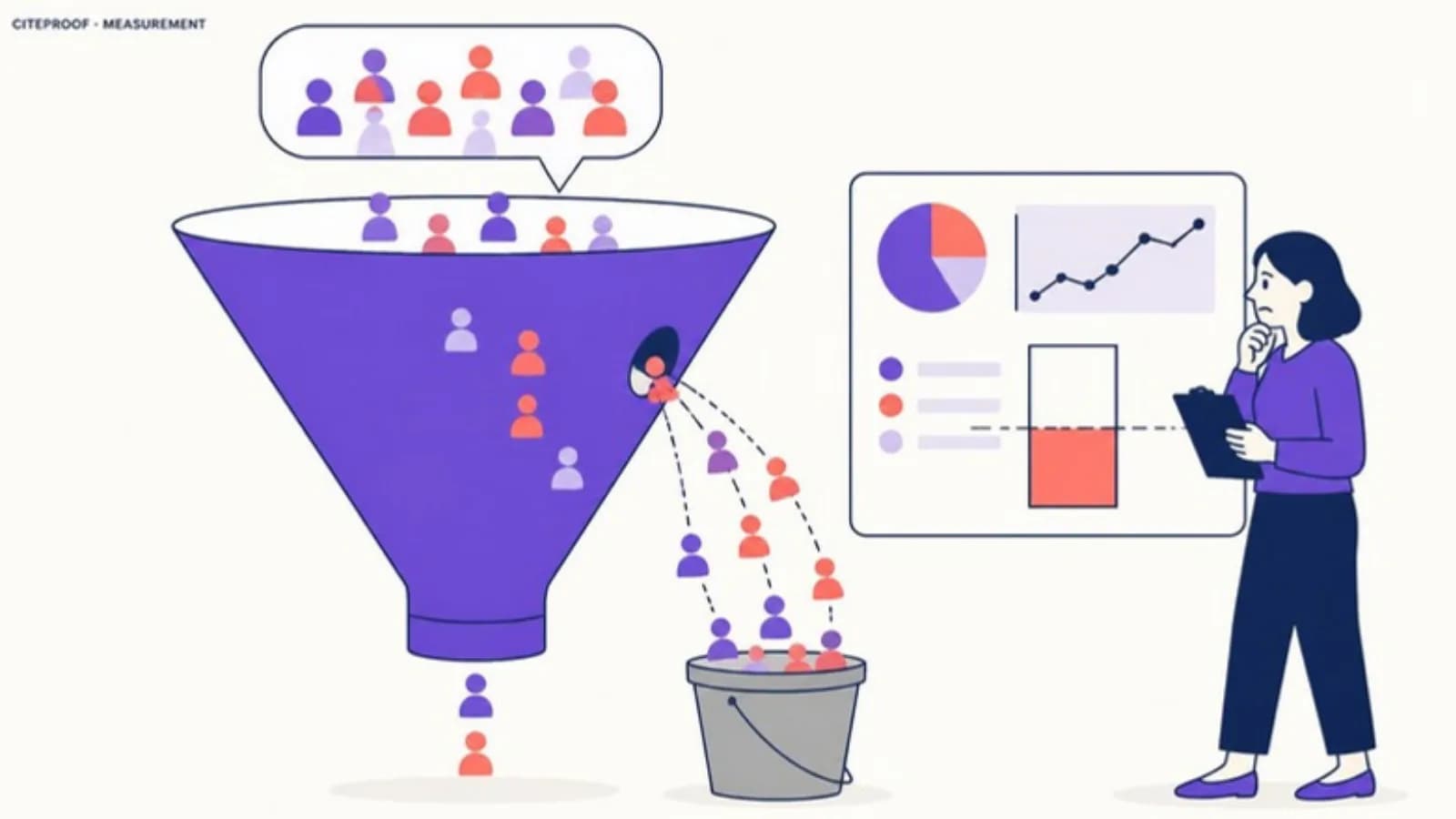
Only 16% of brands systematically track their performance in AI search, according to McKinsey research published in October 2025 [11]. If you are evaluating LLM traffic based on your current GA4 setup, there is a high probability your data is incomplete. Perplexity is frequently misattributed as generic referral traffic. Claude-originated sessions are often missed entirely. Sessions landing on internal search pages, which account for 28.8% of ChatGPT referrals in Previsible's panel, rarely trigger conversion goals [6]. Before concluding that AI traffic "doesn't convert," verify that it is actually being tracked.
The GA4 configuration required to correctly attribute AI referral traffic is not complex, but it requires deliberate setup. The default configuration in most analytics instances lumps Perplexity under a catch-all referral bucket and has no structured mechanism for isolating Claude traffic. ChatGPT is more consistently identified, but the internal-search-landing problem means session quality is systematically understated.
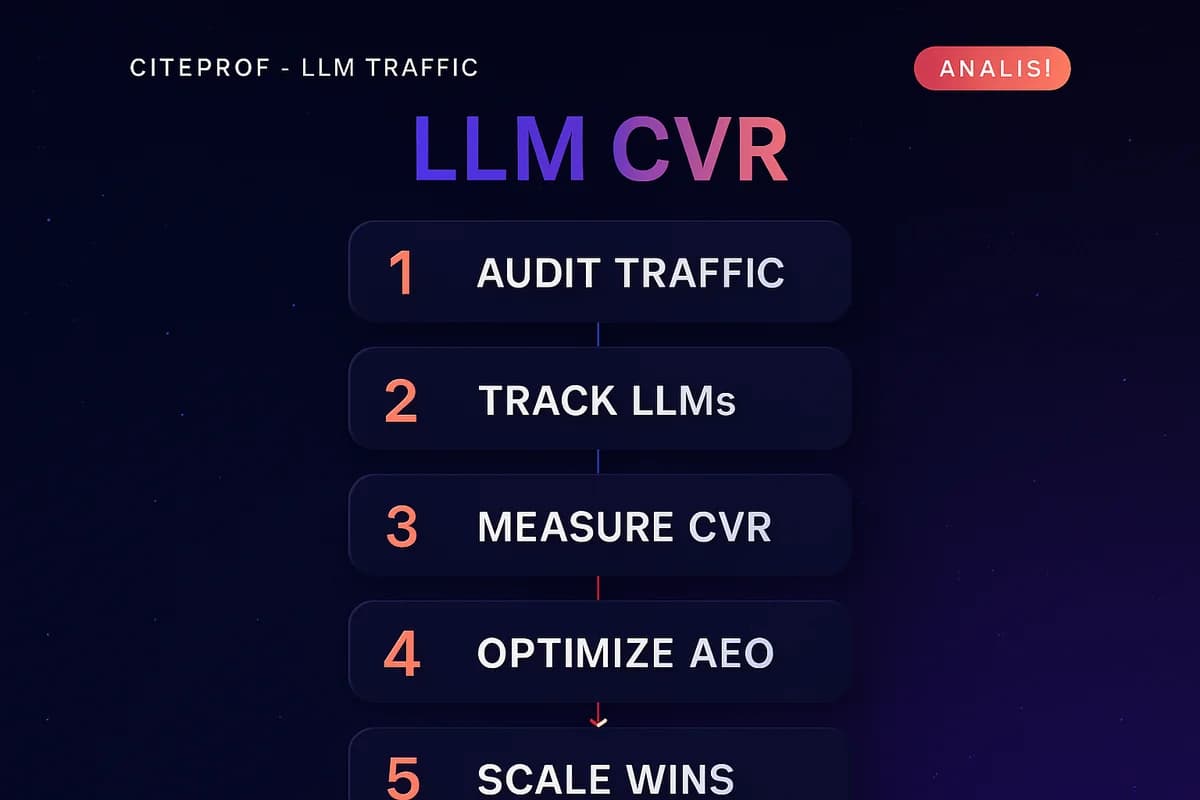
Three configuration steps matter most: first, add perplexity.ai, claude.ai, gemini.google.com, chat.openai.com and chatgpt.com as recognized referral sources in GA4's channel grouping rules. Second, create a custom channel group labeled "AI Search" that aggregates these sources. Third, build a segment that excludes sessions landing on internal search result pages when calculating conversion rates for AI traffic, or, better, create a separate goal for internal search engagement that captures intent without conflating it with purchase conversion.
Once that infrastructure is in place, the benchmark data becomes meaningful. Without it, you are measuring a partial signal and drawing conclusions from it.
The Citation Fragmentation Problem: One Platform Is Not Enough
The engines do not draw on the same sources. In Discovered Labs' analysis, ChatGPT's citations are dominated by Wikipedia (47.9%), Perplexity's top-10 citations by Reddit (46.7%), and Claude's by a different mix again [12]. The same page can be a Perplexity staple and invisible to ChatGPT.
This finding has a direct strategic implication. A team that optimizes exclusively for ChatGPT citations, by targeting domain authority signals, training data inclusion and structured Q&A content, will not automatically appear in Perplexity or Claude responses. The citation logic differs. The content requirements differ. The recency weighting differs.
For teams with limited resources, this does not mean spreading effort equally across four platforms. It means acknowledging that a single-platform AEO strategy has a systematic ceiling, and that the ceiling is moving: the same Goodie data that shows ChatGPT falling from 89% to 63% of B2B AI referrals shows Claude rising from 1.4% to 18.5% in eight months [10].
A practical prioritization framework: start with ChatGPT optimization because volume is highest. Add Perplexity optimization as a second layer because conversion quality is high and the content requirements, long-form, data-rich, well-cited, overlap substantially with editorial quality signals. Treat Claude and Gemini as follow-on priorities once the first two layers are producing measurable citations, and revisit the order every quarter.
What the Google AI Overview Data Tells Us About Citation Access
One additional data point deserves attention because it changes the competitive calculus for citation strategy.
In July 2025, about 76% of Google AI Overview citations came from pages ranking in Google's top 10 for the same query. In Ahrefs' March 2026 update, across 863,000 keywords and 4 million AI Overview URLs, that figure was 38%, with the rest split almost evenly between pages ranking 11–100 (31.2%) and pages outside the top 100 (31%) [13]. Ahrefs notes that its parsing improved between the two readings, so part of the drop is measurement; the direction is not in doubt.
This means two things. First, appearing in AI-generated answers is no longer primarily a function of traditional SEO performance: pages outside the top 10 are now cited at scale by AI systems. Second, teams that have been told "just rank well in Google and the AI visibility will follow" are operating on an increasingly outdated assumption.
The emerging reality is that AI citation and organic search ranking are partially overlapping but structurally distinct objectives. Optimizing for one does not reliably produce the other, in either direction.
AEO vs. SEO: What the Conversion Data Actually Implies for Resource Allocation
The honest framing of this comparison is not "AEO replaces SEO." It is "AEO produces a different kind of traffic that converts differently, and the current measurement gap means most teams are not pricing that difference correctly."
The conversion premium is established across several independent studies for sites where buyers deliberate [1]. The growth trajectory is steep: ChatGPT's outbound referral traffic tripled in a year in Semrush's clickstream data [7]. And the measurement infrastructure at most companies is insufficient to capture the full signal [11].
What that combination implies for resource allocation: not abandoning SEO, but building citation-specific content and measurement capacity alongside it. In the audits we run, the first signals of AEO work, citation appearances on target queries, branded query growth in AI platforms, session quality shifts in GA4, usually show within weeks of the sources being fixed, while a new organic SEO investment is typically judged in quarters. That is internal experience, not a study, and your mileage depends on your starting point.
For B2B companies evaluating whether to prioritize AEO: the question is not whether the conversion premium exists. It does. The question is whether your current measurement setup would even detect it if it were happening in your funnel right now. For most companies, the answer is no.
This is where CiteProof fits.
I built CiteProof for B2B teams who want to know exactly where they stand in AI-generated answers, not based on guesswork or manual prompt-checking, but based on systematic measurement across ChatGPT, Perplexity, Gemini and Claude.
The free scan shows you which queries in your category are generating AI citations, which competitors are being cited, and where your domain currently appears, or doesn't. From there, we build the citation strategy: content architecture, structured data, authority signals, everything needed to move from invisible to cited.
Verified, not promised.
Frequently Asked Questions
Is the 15.9% ChatGPT conversion rate real, or is it cherry-picked from one good client?
It is real in the sense that it comes from actual GA4 data. It is context-specific in the sense that it covers a single Seer Interactive client, tracked over seven months between October 2024 and April 2025; Seer published the methodology alongside the number [1]. It should not be applied universally: ecommerce sites in retail verticals see different, often lower, results. But the directional finding, AI traffic converting significantly above Google organic where buyers deliberate, is corroborated by independent data from Ahrefs and Microsoft Clarity [2].
Why does Gemini convert at only 3% compared to ChatGPT's 15.9%?
Gemini's deep integration with Google Workspace means many users arrive in a task-completion rather than an evaluation mindset. That behavioral difference depresses conversion rates on decision-oriented offers. Gemini traffic is not low quality in absolute terms: 3% is still well above the 1.76% Google organic baseline in the same dataset, but it is differently qualified [1].
How do I track LLM referral traffic accurately in GA4?
Add chatgpt.com, chat.openai.com, perplexity.ai, claude.ai and gemini.google.com as explicitly recognized referral sources in your GA4 channel grouping configuration. Create a custom channel group called "AI Search." Build a conversion segment that excludes or separately tracks sessions landing on internal search result pages, which account for 28.8% of ChatGPT referrals in Previsible's panel and systematically understate conversion rates if left in the main dataset [6].
Does AEO hurt SEO performance, or do they complement each other?
The evidence suggests they complement each other more than they compete. Content that earns AI citations tends to be well-structured, data-rich and authoritative, the same properties that Google's ranking systems reward. The divergence is that Google AI Overviews now cite pages outside the top 10 at increasing rates: 38% of citations came from top-10 pages in Ahrefs' March 2026 reading, down from about 76% in July 2025, so citation authority and organic ranking authority are increasingly distinct [13]. Building for both is the realistic objective; neither fully substitutes for the other.
Which AI platform should I prioritize for citation optimization?
Start with ChatGPT because it commands roughly 63% to 92% of trackable LLM referral traffic depending on the study and the sites measured [6]. Add Perplexity as a close second because its conversion quality (10.5% in the Seer data) is high and its content requirements, long-form, cited, structured, overlap with editorial best practices [1]. Claude is growing rapidly, from 1.4% to 18.5% of B2B AI referrals between mid-2025 and early 2026, and deserves inclusion in any forward-looking citation strategy [10]. Gemini matters for brands with strong Google Workspace integration or tool-oriented content.
Is LLM traffic under 1% of sessions worth optimizing for?
Yes, for two reasons. First, the conversion rate premium: at 15.9% versus 1.76%, a session from ChatGPT was worth roughly nine Google organic sessions in pipeline probability for the Seer client [1]. A small volume of high-converting sessions has meaningful revenue impact. Second, growth trajectory: ChatGPT's outbound referral traffic grew 206% between January 2025 and January 2026 in Semrush's clickstream data [7]. Teams building citation authority now are accumulating a compounding structural advantage.
Does this data apply to ecommerce, or only B2B?
The conversion premium is most pronounced and most consistently documented on sites where the purchase decision is complex enough that buyers conduct extended AI research before visiting: B2B SaaS, professional services, legal, finance, insurance. In ecommerce the picture is different: across 973 sites, ChatGPT referrals converted below every traditional channel except paid social [4], and Adobe's retail data shows AI traffic converting less often than other traffic, with the widest gap in apparel, home goods and grocery [5]. The mechanism, extended AI consideration before clicking, simply matters less when the product is low-consideration and transactional.
How quickly does AEO produce measurable results?
In our experience, early signals, citation appearances in target query clusters, branded query volume shifts, session quality changes in the AI traffic segment of GA4, show within weeks of the sources being fixed, faster than new organic SEO investments, which are usually judged over quarters. The caveat is that "early signals" means citation appearances, not necessarily revenue impact: the funnel from citation to closed deal still depends on offer quality, landing page design and sales process.
Find Out If Your Brand Is Being Cited, or Ignored
CiteProof runs a systematic scan of your brand's presence across ChatGPT, Perplexity, Gemini and Claude. You see exactly which queries cite competitors and where you're missing. Verified, not promised.
Adrian Gramada is the founder of CiteProof, an AI-SEO and AEO platform helping B2B companies measure and grow their presence in AI-generated answers. He writes about the intersection of AI search behavior, citation strategy and measurable business outcomes.
A note on data transparency. The conversion figures in this article come from studies with different methodologies, sample sizes, time periods and conversion definitions. The Seer Interactive figures derive from a single client and are directionally significant, not population-representative. The Microsoft Clarity figures cover a broader sample but measure sign-ups on publisher sites. The Ahrefs figures are self-reported from Ahrefs' own property. No single study establishes a universal conversion rate for LLM traffic: the appropriate use of this data is benchmarking and hypothesis formation, not direct extrapolation to any individual site without internal measurement.
Sources
- [1] Case Study: 6 Learnings, 1 site - How Traffic from ChatGPT Converts · Seer Interactive · June 2025 · accessed 2026-09-29
- [2] AI Traffic Converts at 3x the Rate of Other Channels (Study) · Microsoft Clarity · November 2025 · accessed 2026-09-29
- [3] Does AI Search Traffic Convert Better Than Traditional Search? For Ahrefs, Yes: 0.5% of Visitors Drove 12.1% of Signups · Ahrefs · June 2025 · accessed 2026-09-29
- [4] Study: ChatGPT traffic, sales referrals still trail traditional digital channels · Digital Commerce 360 on Kaiser & Schulze (University of Hamburg, Frankfurt School) · October 2025 · accessed 2026-09-29
- [5] Adobe Analytics: Traffic to U.S. Retail Websites from Generative AI Sources Jumps 1,200 Percent · Adobe · March 2025 · accessed 2026-09-29
- [6] 2026 AI Traffic Report: ChatGPT Wins 92% Share · Previsible · July 2026 · accessed 2026-09-29
- [7] ChatGPT traffic analysis: Insights from 17 months of clickstream data · Semrush · April 2026 · accessed 2026-09-29
- [8] The State Of Business Buying: Risk-Averse Buyers Demand Proof, Not Promises · Forrester · January 2026 · accessed 2026-09-29
- [9] The Answer Economy: G2's 2026 AI Search Insight Report · G2 · March 2026 · accessed 2026-09-29
- [10] 2026 AI Search Traffic Report: ChatGPT's Grip Slipped · Goodie · May 2026 · accessed 2026-09-29
- [11] Half of us now use AI search (and half of 'traditional search traffic' is at risk) · The Drum on McKinsey data · October 2025 · accessed 2026-09-29
- [12] AI Citation Patterns: How ChatGPT, Claude, and Perplexity Choose Sources · Discovered Labs · December 2025 · accessed 2026-09-29
- [13] Update: 38% of AI Overview Citations Pull From The Top 10 · Ahrefs · March 2026 · accessed 2026-09-29
- [14] Analysis of Top AI Search Engines: Who Is Catching Up to ChatGPT? · SE Ranking · June 2026 · accessed 2026-09-29
Read next
- AEO · B2B StrategyReddit and AI Citations: What the Data Really Says (B2B Playbook 2026)
- AEO · E-CommerceAEO for Shopify: How to Get Found by ChatGPT in 2026
- AEO · EcommerceAEO For Ecommerce: How to Get Cited by AI Before Shoppers Decide
CiteProof tracks your brand's visibility across AI answer engines and tells you what to change to get cited. With one rule: the score only moves up after the Verify Bot confirms the fix is actually live.