Best AI Visibility Tools Compared (2026)
The best AI visibility tools (GEO and AEO tools) compared: what each one tracks, its public price on 25 November 2026, and who it is built for.
There is no single best AI visibility tool: there is the right one for your size. All of them do the same core job, which is to put a list of questions to AI assistants on a schedule and record whether your brand is named and which sources are cited. They differ in price, in how many questions and engines a plan includes, and in whether they only measure or also help you fix what they find. They are also sold as GEO tools and AEO tools; the names describe the same product.
- On 25 November 2026, public entry prices ran from free, for one-time checks, to $295 a month; one well-known vendor, Profound, publishes no prices at all [13].
- Engines are not always included: on Peec AI's entry plan you choose three, and each extra one costs $30 a month [6].
- Answers vary from one run to the next, so a single check proves little: in one study the same list of brands came back less than 1 time in 100 [14].
- CiteProof, the tool behind this site, is on the list. It is compared with the same columns as the others.
Want to know if AI assistants recommend your site? Free scan, about a minute →
Most lists of "best AI visibility tools" are written by one of the tools on the list. So is this one, and you should read it with that in mind. To keep it honest, it follows three rules.
- Only what each vendor publishes about itself. Every price, limit and feature below was read on the vendor's own website on 25 November 2026, and each row links to that page at the bottom. Nothing comes from reviews or from memory.
- Regular prices, monthly billing, unless a row says otherwise. Several vendors were running seasonal discounts on that day; they are left out.
- No hands-on verdicts. I have not run these tools side by side, so this guide does not say which one measures best. It tells you what each one says it does, what it costs, and who it is built for.
If you would first like to see what can be measured without paying anything, lesson 0.3 of the free AEO and GEO course goes through the free tools in under four minutes:
What an AI visibility tool does
You give it your brand, your competitors and a list of questions, usually called prompts. On a schedule, it puts those questions to the AI assistants, reads the answers, and reports how often you are named, how often one of your pages is cited, and who appears instead. Some tools stop there. Others suggest changes, write content, or change the site.
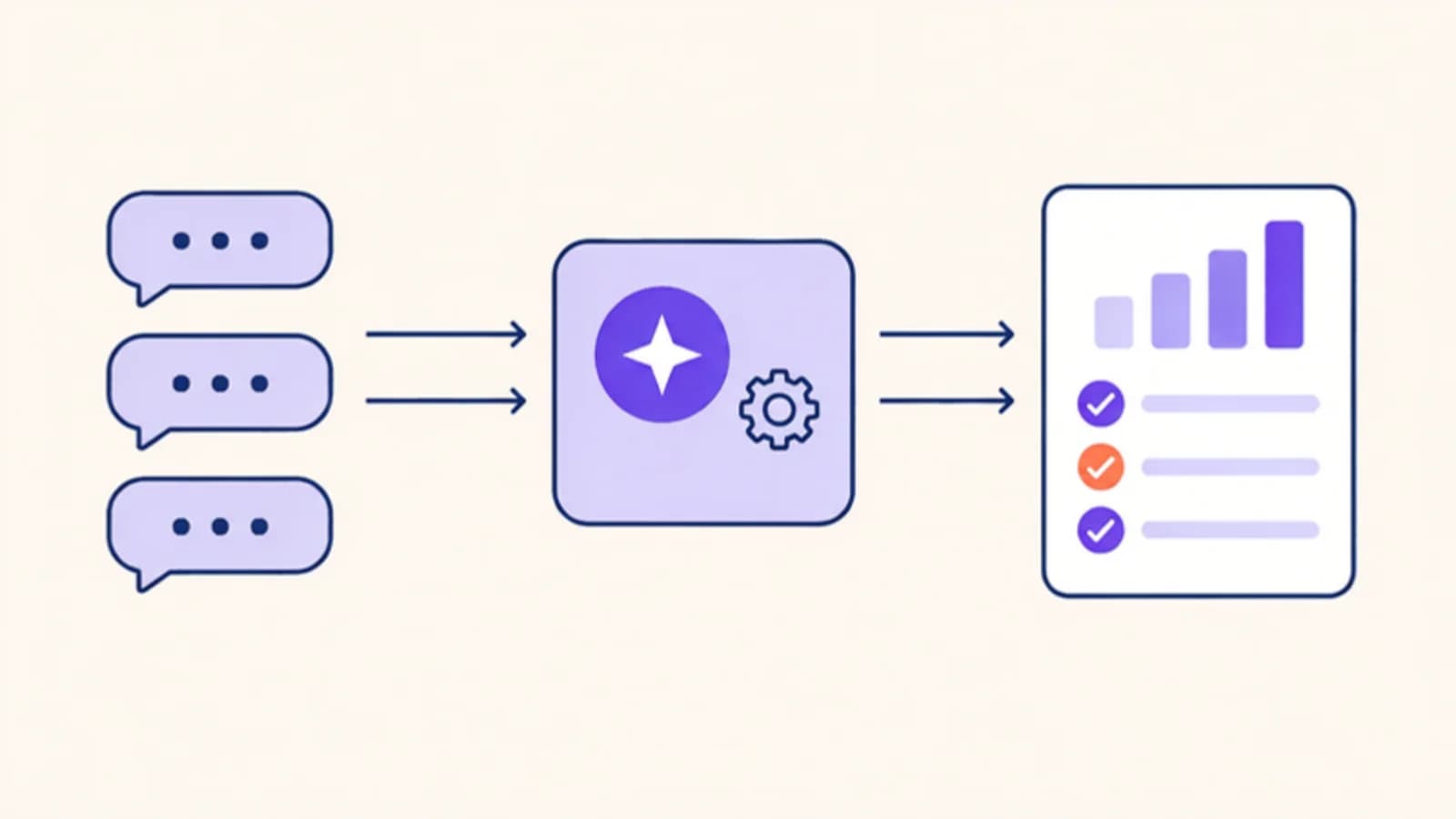
You can do the same job by hand with a spreadsheet; the method is in how to run an AI visibility audit. A tool saves the hours, keeps the conditions the same from one month to the next, and stores the history.
The tools side by side
Entry paid plan of each tool, lowest price first.
| Tool | Entry price per month | What the entry plan includes | Free option |
|---|---|---|---|
| HubSpot AI Search Grader | Free | A one-time score out of 100, on three engines | The tool itself |
| Otterly.AI | €29 | 2,000 credits, for example 16 questions on 4 engines every day | 7-day trial |
| HubSpot AEO | $50 | 25 questions, three engines, daily | Trial |
| CiteProof (ours) | $79 (£79 in the UK) | 50 questions, 5 engines, up to 8 audits a month, fixes for the site | Free scan, free account |
| LLMrefs | $79 | 500 prompts generated from your keywords, weekly reports | 7-day trial |
| SE Visible (SE Ranking) | $89 | 75 questions, 5 projects, daily | 14-day trial |
| Peec AI | $95 | 50 questions, 3 engines of your choice, daily | 7-day trial, free report |
| Surfer AI Search Analytics | $95 | 50 questions, 5 engines, daily | 7-day trial of another plan |
| Semrush AI Visibility Toolkit | $99 per domain | 25 questions tracked daily, 1 domain | None for this toolkit |
| Rankscale | $99 | 1,200 credits, up to 4,800 answers a month | 7-day trial |
| Ahrefs Brand Radar | $129 (inside the Lite plan) | 5 questions on 1 engine, daily | None |
| Scrunch | $250 | 15,000 answers a month, 1 brand, daily | 7-day trial |
| AthenaHQ | $295 | 3,600 credits, one per answer | Free plan with 300 credits |
| Profound | Not published | Custom | None stated |
Each row is taken from the vendor's page: HubSpot [2] [3], Otterly.AI [1], LLMrefs [4], SE Ranking [5], Peec AI [6], Surfer [7], Semrush [8], Rankscale [9], Ahrefs [10], Scrunch [11], AthenaHQ [12] and Profound [13]. CiteProof's row is from our own pricing page.
Three cautions about reading the table. "Questions" and "credits" are not the same unit, so the section on what to ask before you pay shows how to convert them. Semrush's $99 is shown with annual billing on its pricing page [8]. And prices in this market change often: check the vendor's page before you decide.
Which tool for whom
If you want a free first look
- HubSpot AI Search Grader gives a one-time score with no account. HubSpot describes it as a check of what ChatGPT, Perplexity and Gemini say about you "based on their training data", so it reflects what the models learned, not a live search [2].
- CiteProof's free scan asks ChatGPT, Perplexity and Gemini five questions your customers ask and gives a score and a summary in about a minute.
- AthenaHQ has a free plan with 300 credits, one credit per AI answer [12].
If you are a small business with one site
Look at the plans under $100 that do not ask you to buy a whole marketing suite: Otterly.AI's Lite plan, described as "for solo marketers and small teams" [1]; HubSpot AEO, which needs no other HubSpot subscription [3]; LLMrefs, with one plan for everyone [4]; and CiteProof's Visible plan. The difference to weigh is what happens after the measurement. The first three report and recommend. CiteProof also prepares the fixes on the site.
If you already pay for an SEO suite
Check what your subscription already includes before buying anything new. Every paid Ahrefs plan from Lite up includes a small allowance of AI prompt checks [10]. Semrush sells its AI Visibility Toolkit per domain [8]. SE Ranking's tracker is a separate product, SE Visible [5], and Surfer sells a tracking-only plan next to its content plans [7].
If you are an agency
Look for plans priced per client or with many projects: SE Visible has an Agency plan [5], Rankscale's entry plan covers 10 brand dashboards [9], and Otterly.AI allows unlimited brands on every plan [1]. CiteProof's agency plan, with white-label reports, is on request.
If you are a large company
Profound sells tailored packages by demo, "for companies operationalizing AI Search insights and running marketing agents at scale" [13]. Scrunch starts at $250 a month and also sells an Enterprise plan [11]. AthenaHQ's Starter plan is $295 a month [12].
Tool by tool
Profound. No public prices. Its pricing page says the Starter and Growth plans for brands were retired in September 2026; what remains is a custom Enterprise plan with daily tracking on up to 10 answer engines and unlimited seats [13].
Peec AI. Starter is $95 a month for 50 questions, daily, on three engines you choose, with unlimited users; adding an engine costs $30 a month on that plan, and annual billing is 15% less [6].
Otterly.AI. Lite is €29 a month for 2,000 credits. One credit is one question checked once on one engine, and every plan can track every engine, with unlimited brands, competitors, countries and team members [1].
Scrunch. Core is $250 a month: 15,000 answers a month, one brand, five seats, daily collection, eight engines [11].
AthenaHQ. A free plan with 300 credits, then Starter at $295 a month with 3,600 credits; one credit is one AI answer [12].
Semrush AI Visibility Toolkit. $99 a month per domain, with 25 questions tracked daily and an audit of the site's readiness for AI [8].
Ahrefs Brand Radar. Included in Ahrefs' plans from Lite ($129 a month), which comes with 150 checks on AI prompts a month, the equivalent of 5 questions on one engine every day [10].
SE Visible, by SE Ranking. Basic is $89 a month for 75 tracked questions and 5 projects, with daily tracking and a 14-day free trial [5].
HubSpot. Two products. AI Search Grader is "a free one-time diagnostic" [2]. HubSpot AEO tracks 25 questions on three engines for $50 a month, or $45 when paid yearly [3].
Rankscale. Pro is $99 a month for 1,200 credits and 10 brand dashboards, with a 7-day trial [9].
LLMrefs. One plan at $79 a month. You give it keywords instead of questions, and it builds the questions from them: "With LLMrefs you track keywords, not prompts" [4].
Surfer. AI Search Analytics, the tracking-only plan, is $95 a month, or $82 a month billed yearly, for 50 questions [7].
CiteProof (ours). A free scan with no account; a free account with one audit a month on ChatGPT; paid plans from $79 a month on citeproof.co and £79 on citeproof.co.uk, 20% less with yearly billing. The Visible plan tracks 50 customer questions on five engines (ChatGPT, Perplexity, Gemini, Google AI and Claude), with up to 8 audits a month. After each audit it prepares fixes for the site, on WordPress, Shopify and Wix, and it re-checks online that each fix is live before counting it. It is built for small businesses and small agencies, not for large brand teams. Details on the pricing page.
Five questions to ask before you pay
1. How many answers do I actually get? Vendors count in questions, credits or answers. Convert everything to answers per month: questions, times engines, times runs. Peec AI gives the sum itself: 50 questions on 3 engines for 30 days is 4,500 answers [6]. Otterly.AI's 2,000 credits are 2,000 answers, since one credit is one question on one engine, once [1].
2. Which engines are included, and which cost extra? Read the plan table, not the home page. A plan can list many engines and include only three at a time [6].
3. Does it repeat the same questions often enough? Assistants do not give the same answer twice. In SparkToro and Gumshoe's study, 600 volunteers ran 12 questions 2,961 times, and the same list of brands came back less than 1 time in 100 [14]. A tool that checks once a week on one engine sees a thin slice. The same study's authors add a warning worth keeping: be wary of any tool that reports a single "ranking position" in AI.
4. Does it show the sources, and who is named instead of me? A percentage alone does not tell you what to do next. The cited sources do: they show which directory entry to fix and which page to write.
5. Does it only measure, or does it help fix? Both are legitimate. If you have someone to act on a report, a tracker is enough. If you do not, a report you never act on is money spent on bad news.
One more point, from Google. Its guide for site owners says: "No third-party tool has access to our internal ranking or AI systems" [15]. That includes ours. What these tools can do is ask the assistants questions and count what comes back. Be careful with any that claim more.
Can you do without a tool?
Yes. Fifteen questions, four assistants and a spreadsheet are enough to know where you stand, and the step-by-step audit shows how. For Google's own AI answers, Search Console now has a free report, covered in how to appear in Google AI Overviews.
A tool earns its price when you want the same check every week without doing it yourself, when you follow several sites or clients, or when you want the fixes prepared as well as the report.
See where you stand before you choose a tool
Start with the free scan. If the result is worth following over time, the paid plans repeat the audit on five engines and prepare the fixes; if not, you have lost a minute.
Prices of the other tools were read on their own pages on 25 November 2026 and can change.
Frequently asked questions
What is an AI visibility tool?
Software that puts a fixed list of questions to AI assistants such as ChatGPT, Perplexity and Gemini on a schedule, and reports how often your brand is named, which pages are cited, and who appears instead of you.
Are GEO tools and AEO tools different from AI visibility tools?
No. GEO (generative engine optimization) and AEO (answer engine optimization) are two names for the work of getting cited in AI answers, and the tools sold under those names track the same thing.
What is the best AI visibility tool for a small business?
One that fits a single site and a small budget, and that you will actually use. On public prices, the entry plans under $100 a month include Otterly.AI, HubSpot AEO, LLMrefs, SE Visible, Peec AI and CiteProof. Compare how many answers per month each plan gives, which engines it covers, and whether it helps you act on the result.
Are there free AI visibility tools?
Yes. HubSpot's AI Search Grader gives a one-time score. CiteProof's free scan checks five questions on three engines. AthenaHQ has a free plan with a small number of credits. Several paid tools offer a 7-day or 14-day trial.
How much do AI visibility tools cost?
On 25 November 2026, entry plans with public prices ran from €29 to $295 a month, and the enterprise tools quote on request. Compare the number of answers per month, not only the price.
Do these tools improve my visibility, or only measure it?
Most measure and recommend. A few also write content or change the site. Measuring changes nothing by itself; the result moves when the sources the assistants read are corrected and the pages that answer your customers' questions exist.
Can a tool guarantee that ChatGPT will recommend me?
No. No tool controls what an assistant answers, and Google states that no third-party tool has access to its internal systems. A tool can show you where you stand and whether a change made a difference.
Sources
- [1] OtterlyAI Pricing · OtterlyAI · November 2026 · accessed 2026-11-25
- [2] AI Search Grader: Free One-Time AEO Brand Check, No Account Required · HubSpot · November 2026 · accessed 2026-11-25
- [3] HubSpot AEO · HubSpot · November 2026 · accessed 2026-11-25
- [4] LLMrefs - Generative AI Search Analytics · LLMrefs · November 2026 · accessed 2026-11-25
- [5] SE Visible Pricing & Plans · SE Ranking · November 2026 · accessed 2026-11-25
- [6] Pricing for Peec AI · Peec AI · November 2026 · accessed 2026-11-25
- [7] AI Rank Tracker for ChatGPT & AI Overviews · Surfer · November 2026 · accessed 2026-11-25
- [8] AI Visibility Toolkit Pricing · Semrush · November 2026 · accessed 2026-11-25
- [9] Rankscale pricing · Rankscale · November 2026 · accessed 2026-11-25
- [10] Plans & Pricing - Ahrefs · Ahrefs · November 2026 · accessed 2026-11-25
- [11] Scrunch | Pricing · Scrunch · November 2026 · accessed 2026-11-25
- [12] Plans & Pricing | AthenaHQ · AthenaHQ · November 2026 · accessed 2026-11-25
- [13] Pricing | Profound · Profound · November 2026 · accessed 2026-11-25
- [14] New research: AIs are highly inconsistent when recommending brands or products; marketers should take care when tracking AI visibility · SparkToro, with Gumshoe.ai · January 2026 · accessed 2026-11-25
- [15] Google's Guide to Optimizing for Generative AI Features on Google Search · Google Search Central · May 2026 (updated July 2026) · accessed 2026-11-25
Read next
- AEO · Answer Engine OptimizationWhat Is AEO? Answer Engine Optimization Explained
- AI visibility · MeasurementAI Visibility Audit: How to Run One, Step by Step
- AEO · Local ServicesWhich AI Cites You, and Who It Cites Instead: a Real Check on a Real Site (2026)
CiteProof tracks your brand's visibility across AI answer engines and tells you what to change to get cited. With one rule: the score only moves up after the Verify Bot confirms the fix is actually live.