AI Visibility Audit: How to Run One, Step by Step
An AI visibility audit shows whether ChatGPT, Perplexity, Gemini and Google's AI name your business. Seven steps, a free worksheet, every figure sourced.
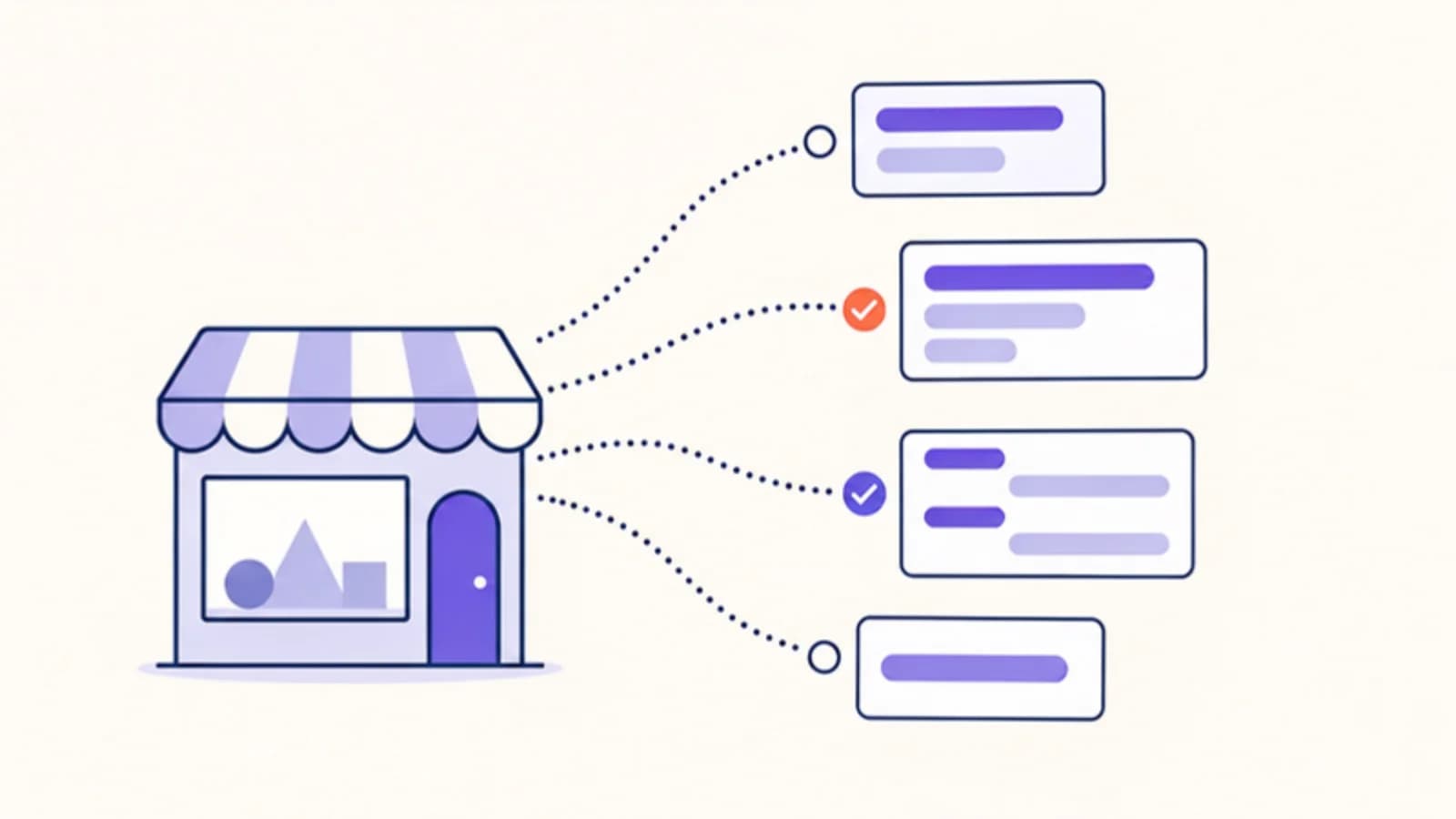
An AI visibility audit is a fixed list of questions your customers ask, put to several AI assistants, with three things written down for every answer: is your business named, is one of your pages linked, and who is named instead. You can run it by hand with a spreadsheet. One answer proves little, so the audit counts how often you appear across many questions, and you repeat it every month with the same list. It is also called a GEO audit or an AEO audit.
- Assistants rarely give the same list twice: in a test with 600 volunteers and 2,961 runs, the same list of brands came back less than 1 time in 100 [1].
- Engines read different sources: across 161,286 questions, only 3.8% of the cited domains were cited by all four engines tested [3].
- A site that shuts out OpenAI's search crawler is not shown in ChatGPT search answers [5].
- Google Search Console now shows how often your pages appear in Google's AI answers [11]. It covers Google Search only.
Want to know if AI assistants recommend your site? Free scan, about a minute →
Search Console tells you where you rank on Google. Nothing built into your site tells you whether ChatGPT names you when a customer asks who to call. An AI visibility audit is how you find out: you ask, you write down what comes back, and you ask again next month.
I build a tool that runs this audit, so I have a stake in the subject. That is why every figure here links to its source at the bottom, with the date I opened it. Several of those sources (Ahrefs, Writesonic, Yext, Insites, and one of the two authors of the SparkToro study) sell software in this field, and I say so where I use them. The method itself needs no software: it is the one taught in lesson 2.2 of the free AEO and GEO course, here in two minutes of video.
What an AI visibility audit measures
A business can show up in an AI answer in three ways, and they are not worth the same.
| How you appear | What it means | What it is worth |
|---|---|---|
| Mention | Your name is in the text | People remember you; few visits |
| Citation | One of your pages is used as a source, with a link | Can bring visits |
| Recommendation | You are named as the one to choose | Where the decision is made |
In this guide "cited" covers all three, and one column of the worksheet records which of them it was.
What you measure is a frequency, not a position. There is no rank 1 in an AI answer. The researchers behind the largest public test of this, which ran the same questions thousands of times, reached the same conclusion: "visibility % across dozens to hundreds of prompts run multiple times is a reasonable metric" [1]. So the number an audit produces is a share: of all the answers you checked, in how many were you there.
Step 1: write 15 to 20 questions your customers ask
Write questions, not keywords. People talk to an assistant the way they would talk to a person. Mix five kinds:
| Kind | Example for a family dentist in Denver |
|---|---|
| Informational | How long does a dental implant take to heal? |
| Comparison | Is a dental implant or a bridge better for one missing tooth? |
| Purchase | How much does a dental implant cost in Denver? |
| Local | Who is a good family dentist near Capitol Hill, Denver? |
| Brand | Is [your practice name] good with nervous patients? |
Good places to find them: the longer searches in Search Console, the "People also ask" box on Google, the emails and calls you already get, reviews (yours and your competitors'), forums and Reddit.
Three rules keep the list useful:
- Give more room to comparison and purchase questions. They are the ones asked just before a decision.
- Put your name only in the brand questions. If your name is in the question, the answer is bound to name you, and the measurement is worthless.
- Keep the list fixed. If it changes every month, you cannot compare one month with the next.
Fifteen to twenty questions is the course's own advice for a first audit. For a quick check, ten are enough: eight without your name and two with it.
Step 2: ask four assistants, under the same conditions
Use ChatGPT, Perplexity, Gemini and Google's AI answers (the AI Overview above the results, or AI Mode). Add Claude and Copilot if you have time.
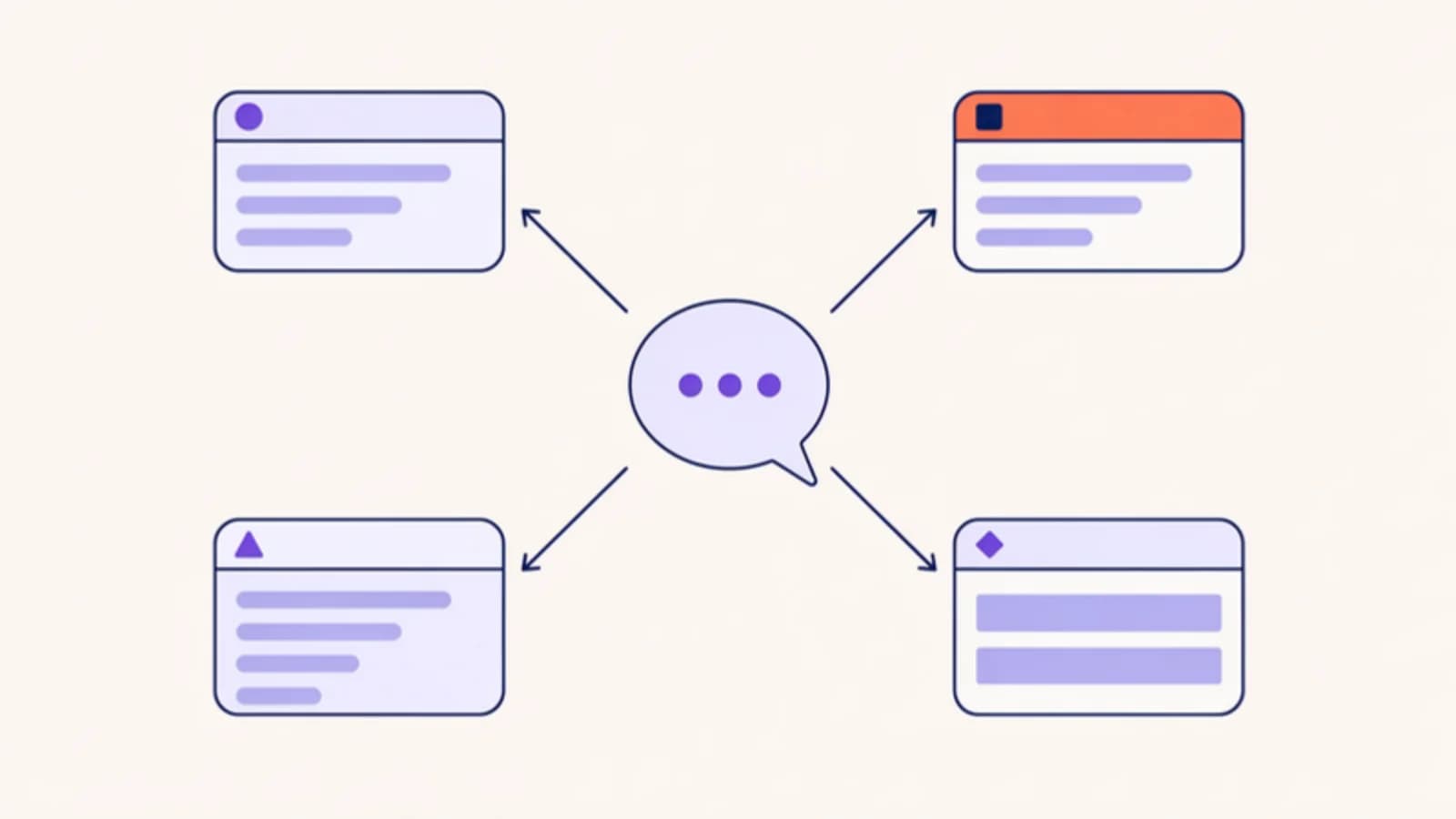
One engine is not enough, because they do not read the same sources. Writesonic ran 161,286 questions through ChatGPT, Gemini, Perplexity and Google AI Overviews and compared the domains each one cited for the same question: only 3.8% were cited by all four, and 72 to 73% were cited by exactly one engine [3]. Ranking well on Google does not settle it either. In Ahrefs' test of 15,000 questions, only 12% of the links cited by ChatGPT, Gemini and Copilot were in Google's top 10 for the same question [4].
Four rules keep the measurement clean:
- A new chat for every question.
- Memory and personalization off, or a private window, where the assistant allows it.
- Write down the city you are asking from: local answers depend on location.
- Do it all on the same day, or close to it.
Step 3: write down one row per question and engine
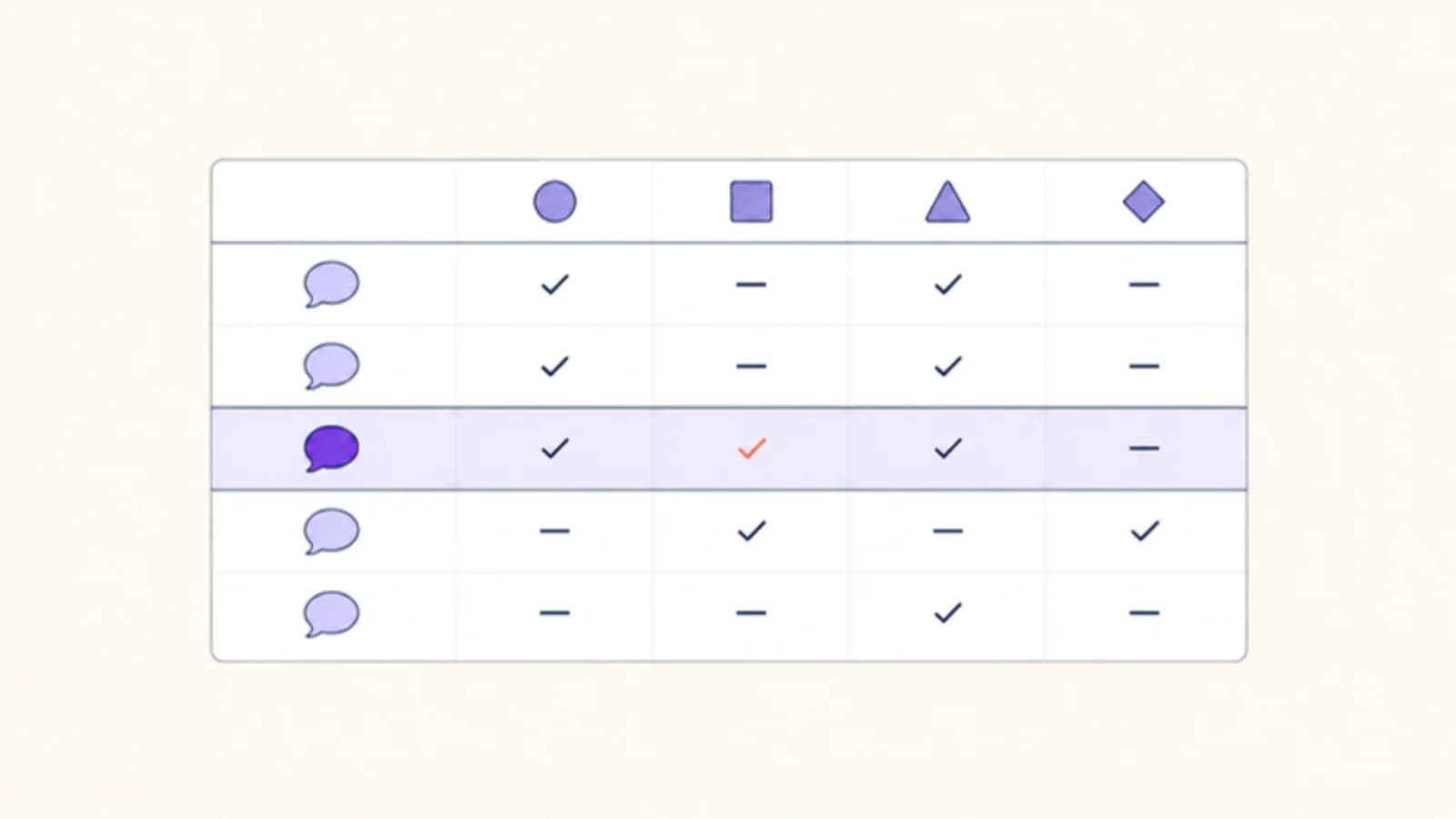
For each answer, fill in one row:
| Column | What goes in it |
|---|---|
| Date | The day you asked |
| Question | Exactly as you typed it |
| Engine | ChatGPT, Perplexity, Gemini, Google AI |
| Are you cited? | Yes or no |
| How | Name only, link to your site, or recommended as the choice |
| Your page cited | Which of your pages the answer used |
| Cited instead | Who is named when you are not |
| Notes | Anything odd: a wrong fact, an old address |
"Cited instead" is the most valuable column. It tells you who you are actually up against, and it is often not who you expect.
Step 4: ask the important questions more than once
One answer tells you little, because the same question asked again can return different names. SparkToro and Gumshoe had 600 volunteers run 12 questions through ChatGPT, Claude and Google's AI a combined 2,961 times: the same list of brands came back less than 1 time in 100, and the same list in the same order less than 1 time in 1,000 [1].
Links move as well. Ahrefs asked five AI tools the same questions every day for 20 days and followed about 37,500 citations: between 50% and 83% of them were gone the next day, and about 75% of those came back within 20 days [2]. Its advice is the same as the course's: do not judge from one check, and do not credit a page edit for a single comeback [2].
So for your high-priority questions, ask each one two or three times on the same engine, and write down how stable the result is: cited always, sometimes, or never.
Step 5: read who is cited instead of you
Open the sources under each answer. You will find your site, a competitor's site, or very often neither: a directory, a review site, a marketplace, a news article.
It helps to know where assistants usually take their facts about a business. Yext looked at 6.8 million citations from more than 1.6 million answers by Gemini, OpenAI and Perplexity: 44% of the cited sources were the business's own website and 42% were listings [9]. Yext sells listings software, and the questions in that study named the brand and the location.
Our own first audit of a real company site, a video production company in Michigan, shows the other side. The site was cited on 23 of 49 customer questions, and a directory, clutch.co, out-cited it on 16. The full walkthrough is in which AI cites you, and who it cites instead.
When you are not in an answer, the reason is usually one of three:
- No page of yours answers that question. That is the first thing to write.
- The page exists but the engines cannot read it. The bots are blocked, the page is not indexed, or the content only appears with JavaScript.
- Another source is more credible on that question. If a directory wins, you need a better page of your own and a complete entry on that directory.
Step 6: check that the AI crawlers can read your site
Open yoursite.com/robots.txt in a browser. Look for a rule that blocks everyone (User-agent: * followed by Disallow: /), for rules that name AI bots, and for misspelled bot names. The three usual mistakes are a block left over from when the site was being built, a plugin that added AI bot rules without telling you, and a typo.
Each company documents which of its bots decides whether you can appear:
- ChatGPT. OpenAI says sites that opt out of OAI-SearchBot "will not be shown in ChatGPT search answers", and that a change to
robots.txtcan take about 24 hours to be picked up for search [5]. Its training crawler, GPTBot, is a separate setting. - Perplexity. PerplexityBot "is designed to surface and link websites in search results on Perplexity", and changes can take up to 24 hours [6].
- Claude. Anthropic says blocking Claude-SearchBot "may reduce your site's visibility and accuracy in user search results" [7].
- Google's AI answers. Google says there are "no additional requirements to appear in AI Overviews or AI Mode": a page must be indexed and eligible to be shown with a snippet, and Googlebot is the crawler that counts [8].
To skip the reading, the free AI visibility check tests your site against 9 user agents and reads your robots.txt. The rules, bot by bot, are in AI bots: who may read the site.
Step 7: check the facts the answers state
Being named with the wrong phone number is a problem, not a win. Insites asked ChatGPT and Perplexity about 10,000 local businesses in the United States: only 55.58% of ChatGPT's results matched the Google Business Profile on every detail, and the phone number was wrong in 30.09% of them [10]. Insites sells website audit software, and it notes that call-tracking numbers and out-of-date profiles push the mismatch up.
For each answer that names you, check hours, prices, services, address and phone. When something is wrong, find where it comes from. It is often an old entry on another site: fix it there.
Work out your citation share
Count the answers you appear in, and divide by the number of questions times the number of engines. With 18 questions on 4 engines you have 72 answers; if you are in 9 of them, your citation share is 9 out of 72, one answer in eight.
Use the same formula for each competitor. Three numbers give you a starting point:
- on how many questions you are cited, out of all of them;
- on which engine you do best and worst;
- who beats you most often.
What Search Console and Analytics can and cannot show
Two free reports cover part of the picture.
Google Search Console has a report for generative AI on Search, available to all websites since August 31, 2026. It shows impressions, meaning how many times links to your site were shown in an AI Overview or in AI Mode, by page, country, device and date [11]. It does not cover assistants outside Google Search.
Google Analytics 4 has an "AI Assistant" channel for visits that arrive from "sources like ChatGPT, Gemini, Deepseek, Copilot, or Grok". It excludes Google's AI Overviews and AI Mode, which stay under Organic Search [12].
Neither report tells you whether an answer named you, on which question, or who was named instead. Being cited and getting visits are two different things, and only asking the questions shows the first.
Repeat every month, under the same conditions
Run the audit again with the same questions, the same engines and the same rules, and write the date. Once a month is a good starting point. Judge the trend over three to six months: one month alone can be noise.
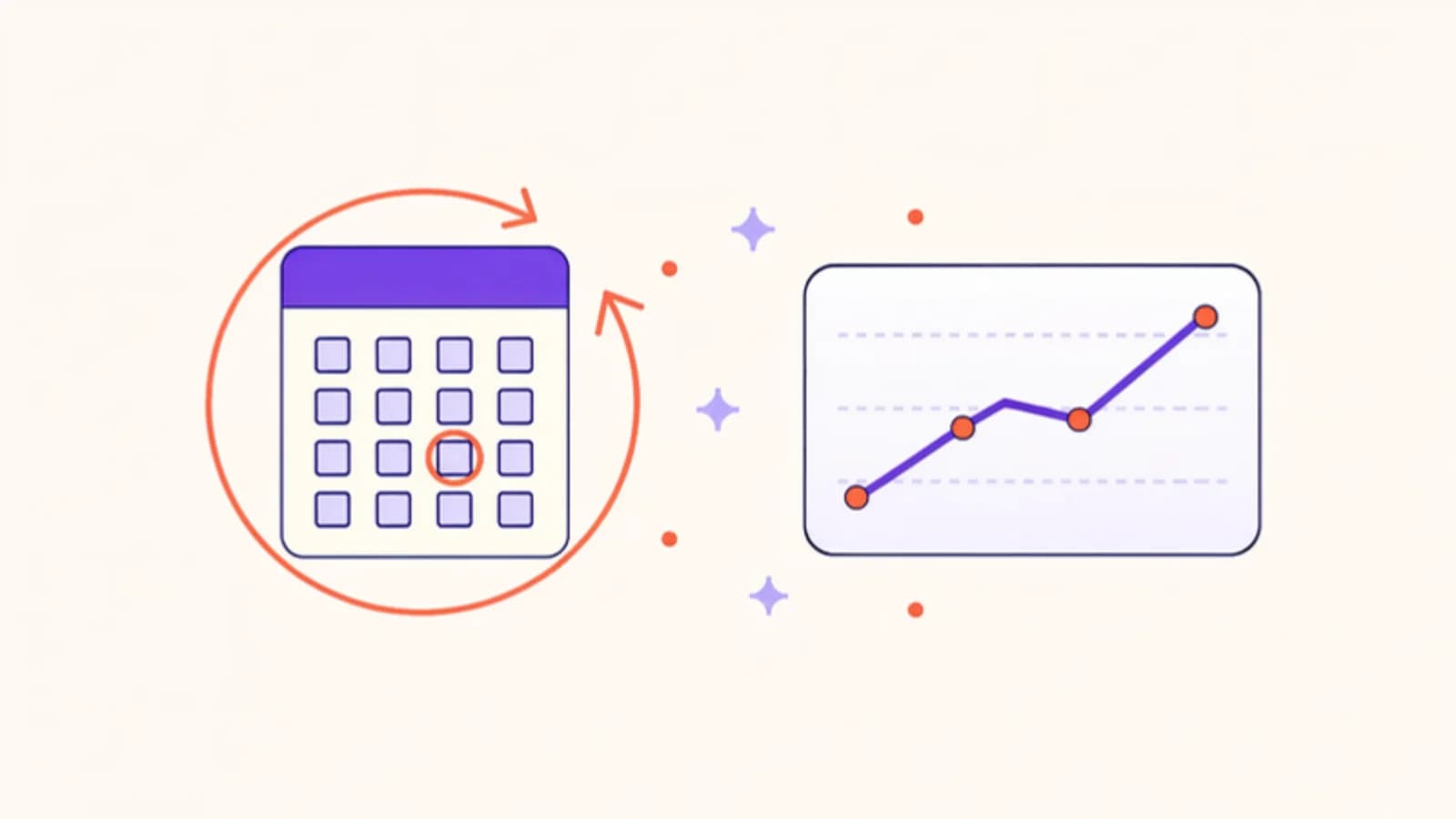
Three rules keep you honest:
- Do not change the questions to push the number up.
- Do not celebrate or panic over one month.
- Write down what you changed on the site and when, so you can tell what followed what.
By hand or with a tool
By hand, the audit costs nothing but time. Fifteen questions on four engines is 60 answers to read every month, more if you repeat the important ones. If you would rather pay for that time, the AI visibility tools compared lists what each one tracks and what it costs.
Three free tools on this site take over parts of it:
- the free scan asks ChatGPT, Perplexity and Gemini five questions and gives a first score;
- the AI citation checker sends one question of your choice to the same three engines and shows who each one cites;
- the AI Overview checker tells you whether your domain is among the sources of Google's AI Overview for a search.
What the paid plans add. CiteProof asks the same questions at every audit on five engines (ChatGPT, Perplexity, Gemini, Google AI and Claude), saves the sources each answer cited, and shows who was cited instead. After each audit it prepares fixes for the site and re-checks online that each one is live before counting it. How to read the result is in your first visibility audit.
See where you stand today
Start with the free scan: five of your customers' questions on ChatGPT, Perplexity and Gemini. Then decide whether to keep going by hand or let the audits run on their own.
A first reading in about a minute. A full audit takes many questions, repeated over time.
Frequently asked questions
What is an AI visibility audit?
It is a check of how often AI assistants name or link your business when people ask the questions your customers ask. You fix a list of questions, put them to several assistants, and record for each answer whether you are there and who is there instead.
Is a GEO audit or an AEO audit something different?
No. GEO (generative engine optimization) and AEO (answer engine optimization) are two names for the work of getting cited in AI answers, so a GEO audit, an AEO audit and an AI visibility audit measure the same thing. Some checklists add a review of the site's pages; the measurement at the center is the one in this guide.
How do I check if ChatGPT mentions my business?
Ask it the questions a customer would ask, without your name in them, each in a new chat, and note whether the answer names you and which pages it links. Do the same on Perplexity, Gemini and Google's AI answers, because each one reads different sources.
How many questions do I need?
Fifteen to twenty for a first audit, ten for a quick check. What matters more than the number is that the list stays the same from one month to the next.
Why do I get a different answer every time I ask?
Assistants do not return a fixed list. In the SparkToro and Gumshoe test, the same list of brands came back less than 1 time in 100. That is why an audit counts how often you appear across many answers instead of looking at one.
Can Google Search Console tell me if ChatGPT cites me?
No. Search Console reports on Google Search, including impressions in AI Overviews and AI Mode. For ChatGPT, Perplexity, Gemini and Claude you have to ask the questions, by hand or with a tool.
How often should I repeat the audit?
Once a month is a good start, with the same questions and engines, and a look at the trend every three months. AI citations change from day to day, so a single month says little on its own.
Do I need a paid tool?
No. A spreadsheet and the four assistants are enough to start. A tool saves the time of asking and recording, keeps the conditions the same from one audit to the next, and stores the cited sources so you can compare months.
Sources
- [1] New research: AIs are highly inconsistent when recommending brands or products; marketers should take care when tracking AI visibility · SparkToro, with Gumshoe.ai · January 2026 · accessed 2026-11-25
- [2] How Stable Are AI Citations? 10 Things We Learned Tracking 37,500 Citations · Ahrefs · October 2026 · accessed 2026-11-25
- [3] Do AI Engines Cite the Same Sources? A Study of 161,286 Prompts · Writesonic · July 2026 · accessed 2026-11-25
- [4] Only 12% of AI Cited URLs Rank in Google's Top 10 for the Original Prompt · Ahrefs · August 2025 · accessed 2026-11-25
- [5] Overview of OpenAI Crawlers · OpenAI · 2026 · accessed 2026-11-25
- [6] Perplexity Crawlers · Perplexity · 2026 · accessed 2026-11-25
- [7] Does Anthropic crawl data from the web, and how can site owners block the crawler? · Anthropic · 2026 · accessed 2026-11-25
- [8] AI Features and Your Website · Google Search Central · December 2025 · accessed 2026-11-25
- [9] AI Doesn't Rank, It Cites. And 86% of Its Sources Are Brand-Managed · Yext · October 2025 · accessed 2026-11-25
- [10] Does ChatGPT hallucinate local businesses? The data on AI accuracy · Insites · July 2026 · accessed 2026-11-25
- [11] Generative AI performance report (Search) · Google Search Console Help · 2026 · accessed 2026-11-25
- [12] Default channel group · Google Analytics Help · 2026 · accessed 2026-11-25
Read next
- AEO · Answer Engine OptimizationWhat Is AEO? Answer Engine Optimization Explained
- AI visibility · ToolsBest AI Visibility Tools Compared (2026)
- AEO · Local ServicesWhich AI Cites You, and Who It Cites Instead: a Real Check on a Real Site (2026)
CiteProof tracks your brand's visibility across AI answer engines and tells you what to change to get cited. With one rule: the score only moves up after the Verify Bot confirms the fix is actually live.