Is SEO Dead in 2026? What the Data Shows
Is SEO dead? No: Google search is growing and still sends sites the most visits. What changed is the click. The 2026 data, and what to do about it.
No, SEO is not dead. Google's search volume is growing, and Google still sends websites far more visits than any AI assistant. What has changed is what a ranking is worth: more searches now end without a click, an AI answer often sits above the results, and a second audience asks assistants instead of searching. SEO still does its job. It no longer tells you the whole story.
- Alphabet's chief executive said in October 2026 that the growth in search queries was the highest in five years [1].
- Across 76,000 websites, Google sent 190 times more traffic than ChatGPT [2].
- In the first four months of 2026, 68.01% of Google searches in the United States ended without a click, up from 60.45% in 2024 [5].
- When an AI summary was shown, people clicked a result in 8% of visits, against 15% without one [6].
Want to know if AI assistants recommend your site? Free scan, about a minute →
"SEO is dead" has been announced many times, and each time it sold something. This time the people saying it have a real change to point to: AI answers on top of Google's results, and assistants that answer without sending anyone anywhere. So the question deserves numbers, not a slogan.
I build a tool that measures AI citations, which means I would gain if you believed SEO was finished. The data does not say that, so this guide does not either. Every figure links to its source at the bottom with the date I opened it. Several sources sell SEO software or services (Ahrefs, SparkToro, Seer Interactive, Similarweb), and I mark them where I use them.
Part of the answer is what a visit from an assistant is worth. Lesson 1.4 of the free AEO and GEO course covers that in three minutes:
What is still true
People are searching more, not less. On Alphabet's earnings call of October 2026, the company's chief executive said: "Our AI investments are driving increased usage and overall query growth", and that the year-over-year growth rate in queries was the highest in five years [1]. That is the company's own statement, without a published figure, but it is made to investors.
Google is still where the visits come from. Ahrefs looked at its analytics data from 76,000 websites: Google accounted for nearly 40% of all traffic and ChatGPT for 0.21%, a ratio of 190 to 1 [2].
People who use assistants still use Google. According to Similarweb data reported by Search Engine Journal, 461 million of ChatGPT's 494 million users, 95%, also used Google in the same three months of 2026 [3]. The assistant is an addition to search for most people, not a replacement.
Google's AI answers are built on its rankings. Google's guide for site owners opens with the question "Is SEO still relevant for generative AI search?" and answers "In short, yes!", because its AI features "are rooted in our core Search ranking and quality systems" [4].
What has changed
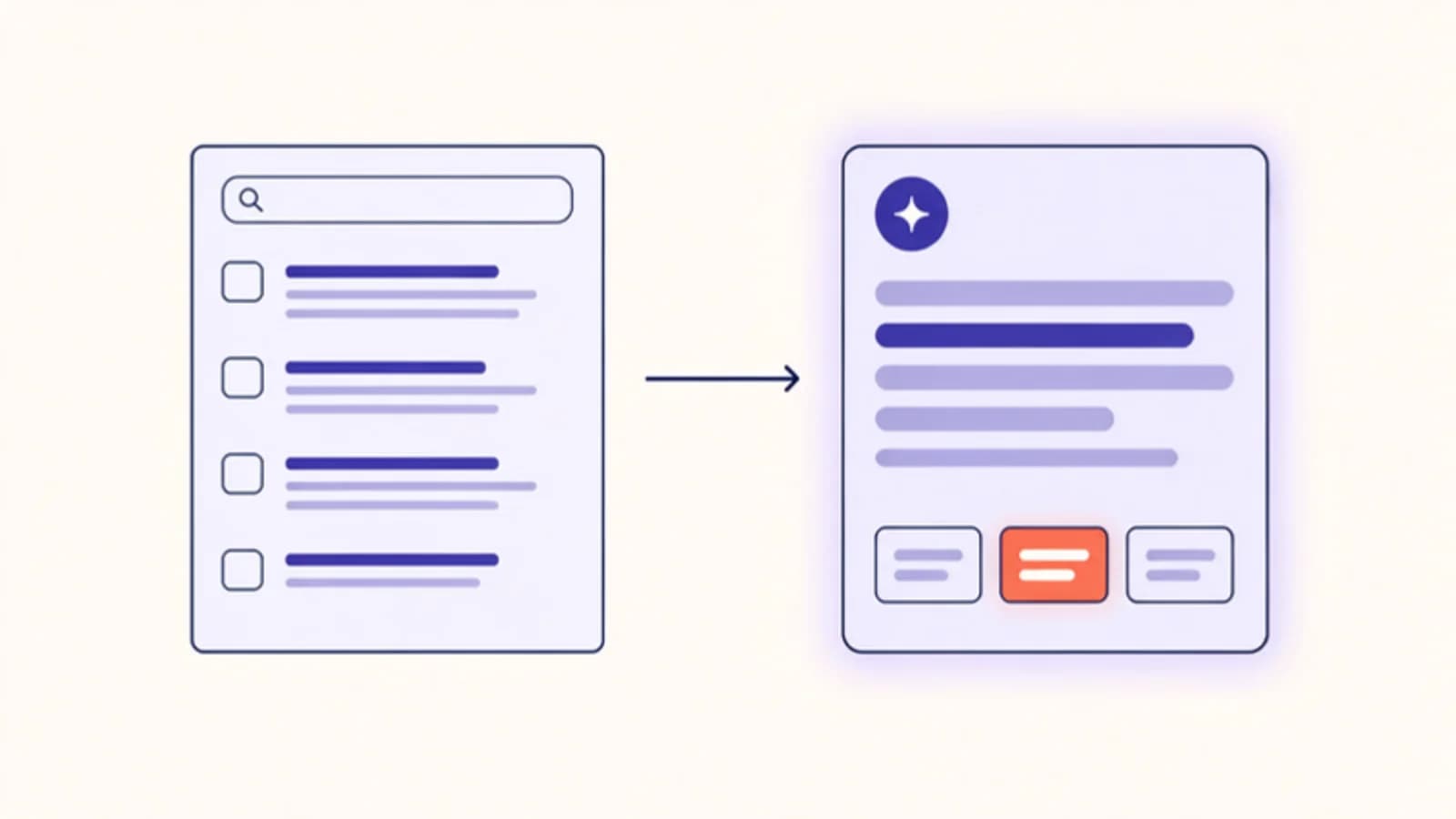
More searches end without a click. SparkToro, using Similarweb's panel, found that 68.01% of Google searches in the United States ended without a click in the first four months of 2026. In 2024 the figure was 60.45% [5].
Source: SparkToro, on Similarweb's US panel [5]
An AI answer takes part of the click. Pew Research Center followed the browsing of 900 US adults in March 2025. On searches with an AI summary, people clicked a traditional result in 8% of visits, against 15% without one [6]. Ahrefs, comparing 300,000 keywords, found that an AI Overview goes with a 58% lower click rate for the page ranking first [7]. Google disputes the broad picture: it said in August 2025 that total organic clicks from Search to websites had been "relatively stable year-over-year" [8]. It gave no figures.
Ranking first no longer means being the source. Ahrefs found that about 76% of the pages cited in Google's AI Overviews ranked in the top 10 in July 2025, and about 38% in March 2026, with a change of method between the two studies [10]. Outside Google the gap is wider: only 12% of the links cited by ChatGPT, Gemini and Copilot were in Google's top 10 for the same question [11].
There is a second audience. OpenAI counts 1.2 billion people using ChatGPT each week [12]. It is not only ChatGPT: in Similarweb's data, ChatGPT's share of visits to AI platforms fell from about 76% in June 2025 to roughly 53% by May 2026, as other assistants grew [13].
What that means: a ranking is worth less than it was
Put the two lists together. The same position on Google brings fewer visits than it did, because some of the people who searched got their answer on the results page.
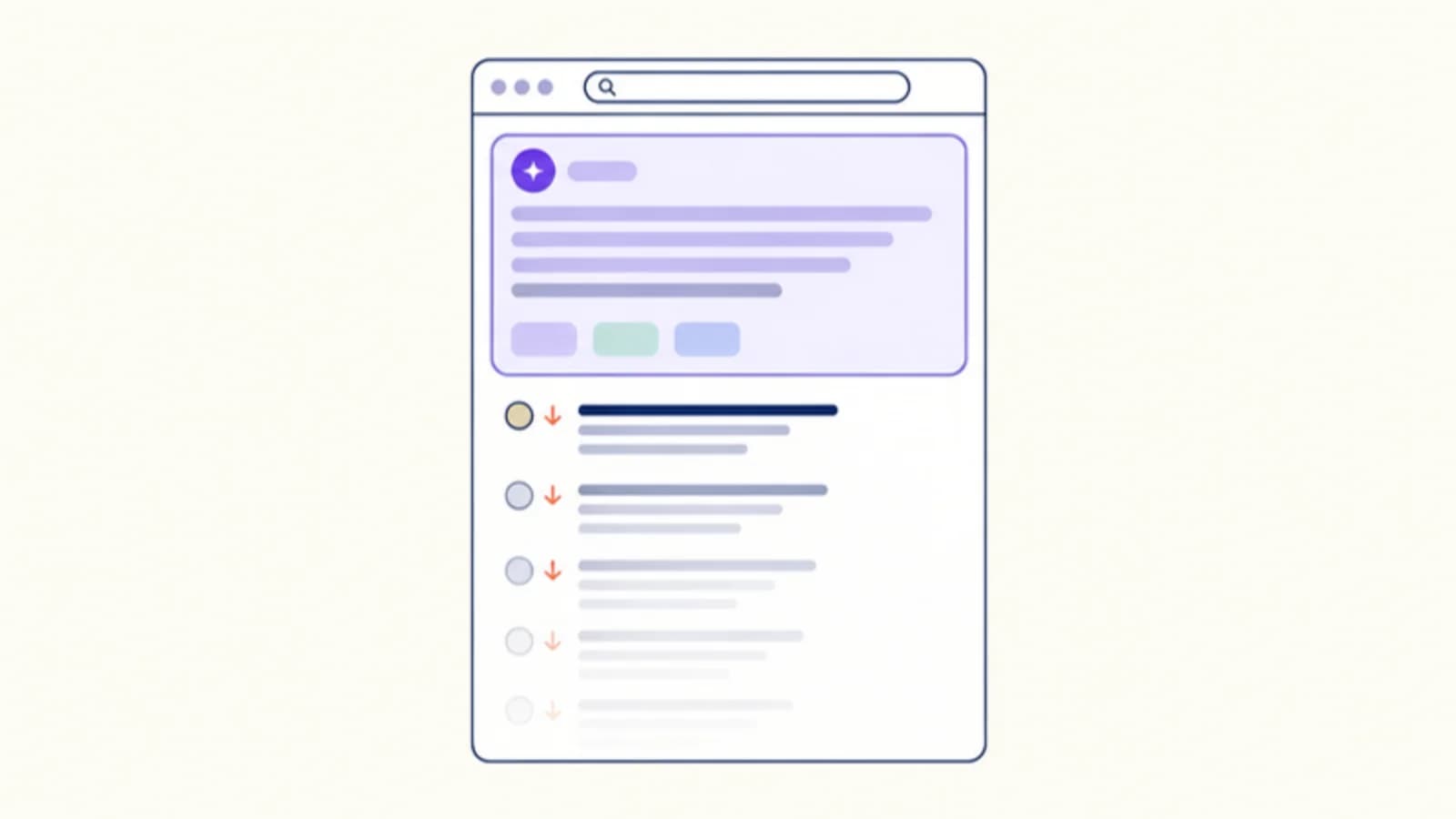
Being part of that answer softens the loss. In Seer Interactive's data from 53 brands, a brand cited in the AI Overview got 120% more organic clicks per impression than one that was not cited, though still 38% fewer than on searches with no Overview at all [9]. Seer is an agency, and the finding is an observation, not an experiment.
So the practical change is in what you look at. "Where do I rank" used to be most of the picture. Now it sits next to a second question: "when an answer is written, am I in it".
Is GEO replacing SEO?
No. GEO (generative engine optimization) is the work of getting cited inside AI answers, and it stands on the same foundations as SEO.
Google says so about its own search: optimizing for its AI features is, in its words, still SEO [4]. A trade publication with no tool to sell reaches the same conclusion: "No, GEO will not replace SEO in the foreseeable future", because people still use ordinary search [14]. A Forrester analyst puts the relationship in one sentence: "AEO is significantly, but not fundamentally, different from SEO" [15].
The full comparison of the three terms is in GEO vs SEO vs AEO.
What to do, if you run a small business
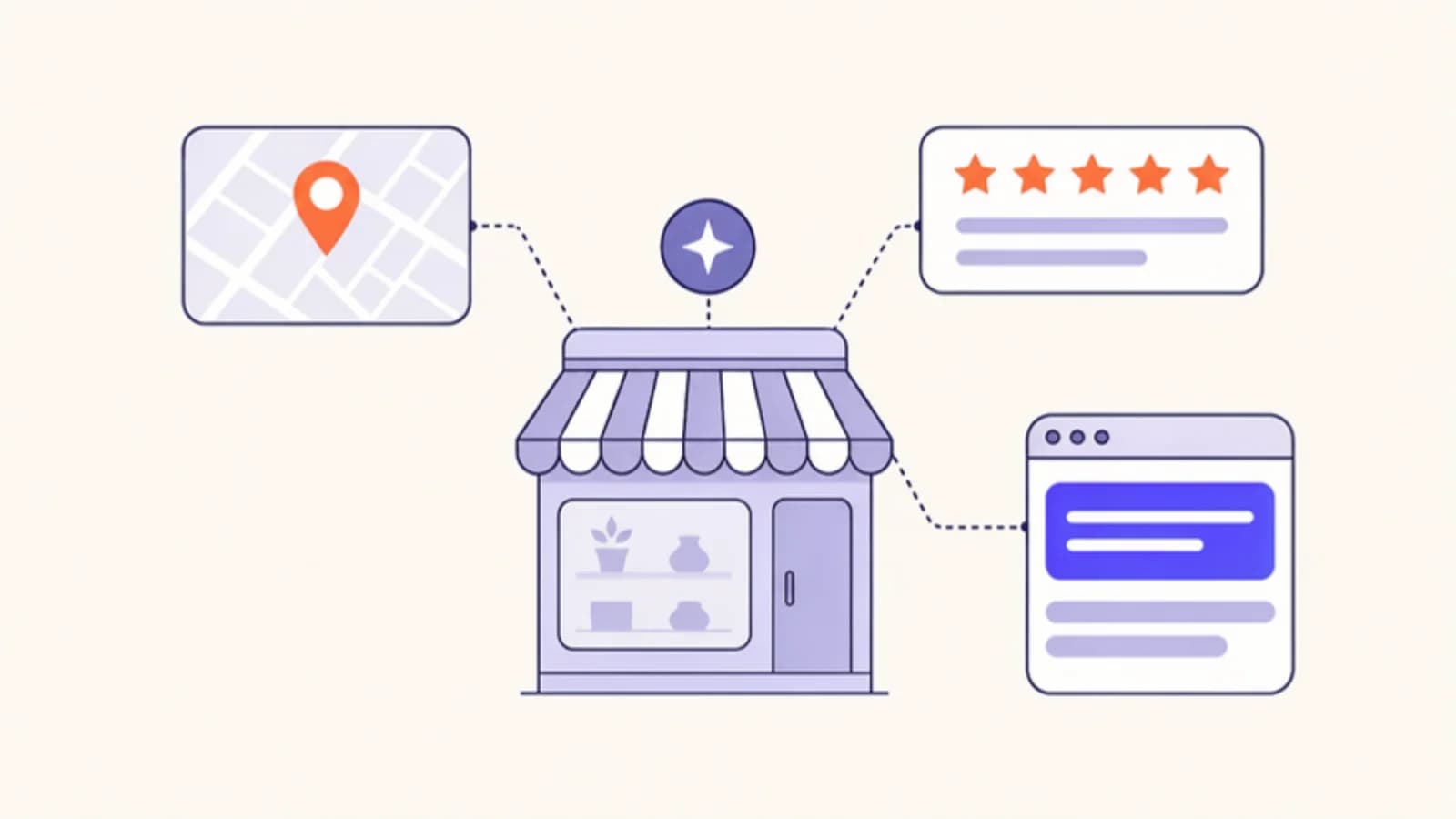
- Do not stop doing SEO. It is still the largest source of visits, and Google's AI answers start from its rankings.
- Stop judging it by position alone. Look at clicks and impressions together in Search Console. If impressions hold and clicks fall, an answer on the results page is probably taking the click.
- Put the answer where it can be lifted. A plain answer near the top of the page, with facts and sources, serves the reader and the answer box at once.
- Check the assistants as well. Ask them the questions your customers ask and note whether you are named. The method is in how to run an AI visibility audit.
- If you pay an agency, ask for both reports. Rankings and clicks, and how often AI answers name you. If they can only show the first, you are seeing half the picture.
For Google's own AI answers, the specifics are in how to appear in Google AI Overviews.
See the half that rankings do not show
The free scan tells you whether ChatGPT, Perplexity and Gemini name you on five of your customers' questions. Keep your SEO; add the second measurement.
A measurement, not a promise: no one can make a citation certain.
Frequently asked questions
Is SEO dead in 2026?
No. Google's search volume is growing and Google remains the largest source of visits for most websites. What has fallen is the share of searches that end in a click.
Is SEO still relevant in 2026?
Yes. Google's own AI answers are built on its ranking systems, so a page that cannot be found by search cannot be cited there either.
Is AI replacing SEO?
It is changing what SEO delivers. AI answers on the results page take part of the click, and assistants answer a growing number of questions without sending a visit. The work of being findable, readable and trusted stays the same.
Is GEO replacing SEO?
No. GEO adds a second thing to measure, which is whether AI answers name or cite you. It rests on the same foundations as SEO.
Will ChatGPT replace Google?
The data does not point that way so far. Most ChatGPT users also use Google, and Google sends websites far more visits. The two are used side by side.
Should I stop paying for SEO?
No. Ask for more from it: reports that show clicks as well as positions, and a check of what AI assistants say about your business.
Why did my traffic fall while my rankings stayed the same?
One likely reason is an AI answer above the results for your main searches. Compare impressions and clicks in Search Console for the same pages: stable impressions with falling clicks point to it.
Sources
- [1] Q3 2026 earnings call: Remarks from our CEO · Google · October 2026 · accessed 2026-11-25
- [2] ChatGPT Has 12% of Google's Search Volume but Google Sends 190x More Traffic to Websites · Ahrefs · 2025 · accessed 2026-11-25
- [3] AI Search Isn't Replacing Google, It's Layering On Top – Similarweb Data · Search Engine Journal, reporting Similarweb data · 2026 · accessed 2026-11-25
- [4] Google's Guide to Optimizing for Generative AI Features on Google Search · Google Search Central · May 2026 (updated July 2026) · accessed 2026-11-25
- [5] In 2026, Less than One Third of Google Searches Still Send a Click · SparkToro · 2026 · accessed 2026-11-25
- [6] Do people click on links in Google AI summaries? · Pew Research Center · July 2025 · accessed 2026-11-25
- [7] Update: AI Overviews Reduce Clicks by 58% · Ahrefs · February 2026 · accessed 2026-11-25
- [8] AI in Search: Driving more queries and higher quality clicks · Google, The Keyword · August 2025 · accessed 2026-11-25
- [9] AIO Impact on Google CTR: 2026 Update · Seer Interactive · April 2026 · accessed 2026-11-25
- [10] Update: 38% of AI Overview Citations Pull From The Top 10 · Ahrefs · March 2026 · accessed 2026-11-25
- [11] Only 12% of AI Cited URLs Rank in Google's Top 10 for the Original Prompt · Ahrefs · August 2025 · accessed 2026-11-25
- [12] Introducing Businesses in ChatGPT · OpenAI · November 2026 · accessed 2026-11-25
- [13] AI Search Stats in 2026 · Similarweb · July 2026 · accessed 2026-11-25
- [14] GEO vs. SEO: What's the difference? · TechTarget · July 2025 · accessed 2026-11-25
- [15] SEO's Hype-Fueled Move To The Center Of The Marketing Mix · Forrester · November 2025 · accessed 2026-11-25
Read next
- AEO · Answer Engine OptimizationWhat Is AEO? Answer Engine Optimization Explained
- GEO and AEO · FundamentalsGEO vs SEO vs AEO: What Is the Difference?
- AEO · Google AI OverviewsHow to Appear in Google AI Overviews (2026 Guide)
CiteProof tracks your brand's visibility across AI answer engines and tells you what to change to get cited. With one rule: the score only moves up after the Verify Bot confirms the fix is actually live.