GEO vs SEO vs AEO: What Is the Difference?
GEO vs SEO vs AEO: what each term means, where the names come from, what Google says, what the data shows, and whether GEO is replacing SEO.

SEO is the work of ranking your pages in search results. AEO (answer engine optimization) and GEO (generative engine optimization) are two names for a newer aim: being named or cited inside the answers that AI assistants write. The foundations are shared. What differs is the result you measure: positions and clicks for SEO, how often an answer names you for AEO and GEO. GEO is not replacing SEO; it is built on it.
- Google's position: "optimizing for generative AI search is optimizing for the search experience, and thus still SEO" [1].
- Yet ranking and being cited are two different results: in one test, only 12% of the links cited by ChatGPT, Gemini and Copilot were in Google's top 10 for the same question [8].
- "GEO" comes from a research paper first published in 2023, whose best methods raised a source's visibility in generated answers by 30 to 40% in a lab setting [3].
- Google still sends far more visits: across 76,000 websites, 190 times more than ChatGPT [16].
Want to know if AI assistants recommend your site? Free scan, about a minute →
If you run a business, you have probably been told in the same month that SEO is dead, that you need GEO, and that AEO is the real name for it. The three letters describe less than the noise suggests. This guide sets out what each term means, where it came from, what Google and OpenAI have put in writing, and what the measurements show.
I build a tool that measures AI citations, so I have a stake in the answer. Every figure links to its source at the bottom with the date I opened it. Several sources sell software or services in this field (Ahrefs, seoClarity, SparkToro), and I mark them where I use them.
If you prefer video, lesson 1.1 of the free AEO and GEO course covers the same ground in three and a half minutes:
SEO, AEO and GEO side by side

| SEO | AEO | GEO | |
|---|---|---|---|
| Stands for | Search engine optimization | Answer engine optimization | Generative engine optimization |
| The result you want | A high position in the list of results | To be the answer, or part of it | To be one of the sources an AI answer cites |
| Where it happens | Google and Bing result pages | First featured snippets and voice assistants, now AI assistants | ChatGPT, Perplexity, Gemini, Claude, Google's AI answers |
| Name in use since | Before the other two | 2018 | 2023 |
| What you measure | Position, impressions, clicks | Whether an answer names you | How often answers cite you, per engine |
The middle and right columns have drifted together. When "answer engine" was coined, the answers were Google's featured snippets and what a smart speaker read out. Today most answers are written by a generative model, so AEO and GEO now describe the same work.
Where each name comes from
SEO is the oldest of the three and needs no introduction: it is the practice of making pages easy for search engines to find, understand and rank.
AEO appeared in 2018. The earliest dated page I could open is a recap of the BrightonSEO conference of April 2018, which lists a talk titled "A Universal Strategy for Answer Engine Optimisation (beyond position 0)" [4]. "Position 0" was the featured snippet, the boxed answer above Google's results. The idea was that a search engine had turned into an answer engine, and that the aim was to be the answer it gave.
GEO comes from a research paper, "GEO: Generative Engine Optimization", by six authors from Princeton University, IIT Delhi and elsewhere. It was first posted in November 2023 and presented at the KDD conference in Barcelona in August 2024 [3]. The authors built a test set of 10,000 questions and tried nine ways of rewriting a page to see which made it more visible in a generated answer. Three worked best: citing sources, adding quotations and adding statistics, which "achieved a relative improvement of 30-40%" on their main measure. Keyword stuffing, an old SEO habit, gave "little to no improvement" [3].
Two limits of that paper are worth knowing. The engine it tested was a simulation built on a language model of the time, with a second check on Perplexity; it was not ChatGPT search or Google's AI Overviews as they work today. And the gains were measured as share of the answer's text, not as visits or sales.
You will also meet LLMO, AI SEO, AI search optimization and LLM SEO. Wikipedia's entry lists them as other terms for the same concept and notes that usage varies "with no consensus definition" [5].
GEO vs AEO: is there a real difference?
In practice, no. The work is the same, and the label depends on who is speaking.
Some organizations do separate them. Microsoft Advertising's guide defines AEO as optimizing content "for AI agents and assistants (like Copilot or ChatGPT)", and GEO as optimizing it for generative AI search environments [6]. Others treat the two as one: Wikipedia redirects "answer engine optimization" to its GEO article [5].
This site uses both names together, because customers search for both. If someone sells you AEO and GEO as two separate services, ask what each one measures. If the measure is the same, so is the service.
What Google and OpenAI say
Google addressed the question directly in the guide it published in May 2026. Under the heading about "AEO" and "GEO", it writes: "From Google Search's perspective, optimizing for generative AI search is optimizing for the search experience, and thus still SEO" [1]. The same guide tells site owners to put effective SEO ahead of what it calls "AEO/GEO hacks" [1].
Note the scope. Google is speaking about Google Search, where the AI answers are built on the same ranking systems as the ordinary results. It says nothing about ChatGPT, Perplexity or Claude.
OpenAI's description of ChatGPT search is shorter: "ChatGPT ranks search results using multiple factors intended to help users find relevant, reliable information. Placement is not guaranteed." To be eligible at all, a site has to let OpenAI's search crawler in [7].
An outside view sums it up well. A Forrester analyst wrote that "AEO is significantly, but not fundamentally, different from SEO" [11].
What the data shows: related, but not the same result
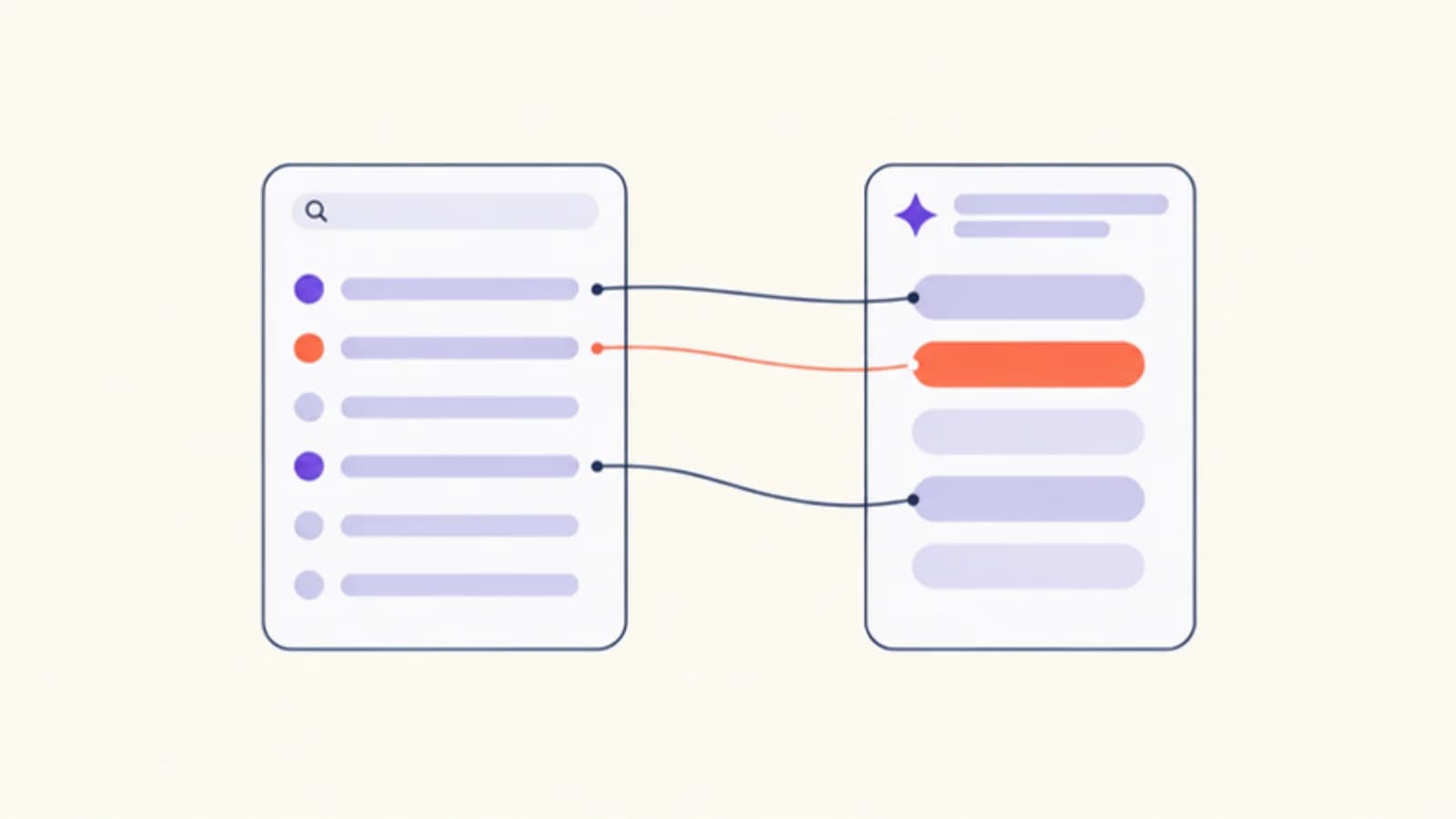
If GEO were simply SEO, the pages that rank first would be the pages that get cited. They often are not.
Outside Google, the overlap is small. Ahrefs ran 15,000 questions through Google and four AI assistants and compared the links. On average, only 12% of the links the assistants cited were in Google's top 10 for the same question. Perplexity was the exception, with 28.6% [8]. Ahrefs sells SEO software, and the questions were long and specific.
Inside Google, the overlap is larger and falling. The same company found that about 76% of the pages cited in Google's AI Overviews ranked in the top 10 in July 2025, and about 38% in March 2026. It notes that its method changed between the two studies, so part of the drop is a change in what it could see [9].
But ranking is still where Google starts. Google's own description is that an AI Overview begins by examining "the ranked results returned" for the search, and that the model may then run related searches of its own [2]. In seoClarity's data, 94% of AI Overviews cited at least one page from the top 20 results [10].
The fair summary: ranking well makes a citation more likely, especially on Google, and it does not make one certain. That gap is the reason the second measurement exists.
What actually differs in the work
| SEO | GEO and AEO | |
|---|---|---|
| Unit of success | A position in a list | A mention or a link inside an answer |
| What gets read | Your page, by a crawler that indexes it | Your page, plus what directories, reviews and other sites say about you |
| What helps | Crawlable pages, useful content, links from other sites | All of that, plus an answer stated plainly in text, facts with sources, the same facts everywhere |
| What you see for free | Search Console: clicks, impressions, click rate, average position [12] | Search Console: impressions in Google's AI answers [13]; for other assistants, only what you ask them |
| How stable it is | Positions move slowly | Answers change from one day to the next |
Two rows deserve a comment.
The measurement row is where small businesses get lost. Search Console reports clicks and positions for ordinary results [12], and since August 2026 it reports impressions in AI Overviews and AI Mode for every site [13]. For ChatGPT there was nothing official until November 2026, when OpenAI began showing businesses "the number of mentions and website clicks a business receives" in a new Business Hub, still in beta [14]. For everything else, the measurement is the one described in how to run an AI visibility audit: the same questions, on several assistants, every month.
The "what gets read" row is the practical difference. A search engine ranks your page. An assistant puts together an answer about you from several places, and your own site is only one of them.
Is SEO dead? Is GEO replacing SEO?
No to both, and the numbers are not close.
- Google search is still growing. On Alphabet's earnings call of October 2026, its chief executive said the year-over-year growth in search queries was the highest in five years [15].
- Google still sends the visits. In Ahrefs' analytics data from 76,000 websites, Google accounted for nearly 40% of all traffic and ChatGPT for 0.21%, a ratio of 190 to 1 [16].
What has changed is what happens after the search:
- Fewer searches end in a click. In the first four months of 2026, 68.01% of Google searches in the United States ended without a click, up from 60.45% in 2024, according to SparkToro's analysis of Similarweb data [17].
- AI summaries take part of the click. In Pew Research Center's panel of 900 US adults, people clicked a result in 8% of visits when an AI summary was shown and in 15% when it was not [18].
- A second audience has appeared. OpenAI counts 1.2 billion people using ChatGPT each week [14].
So SEO is not dead: it remains the larger source of visits by a wide margin (the numbers are set out in is SEO dead?). GEO is not a replacement: it measures something SEO reports do not show, which is whether the answer itself mentions you.
What to do, in order

For a small business, the three letters reduce to one list.
- Keep the SEO basics in place. Pages that can be crawled and indexed, useful content, a Google Business Profile that is complete. Everything else depends on it, including Google's AI answers.
- Let the AI search crawlers read your site. OpenAI, Perplexity and Anthropic each document a crawler that decides whether you can appear in their search answers. The rules are in AI bots: who may read the site.
- Answer your customers' questions in plain text, with facts. The answer at the top, prices and details where they can be published, sources for your numbers.
- Keep the same facts everywhere. Website, listings, directories, profiles. An assistant that finds two different phone numbers has to guess.
- Measure both results. Positions and clicks in Search Console; mentions and citations with a fixed list of questions. One does not tell you the other.
For the two halves in depth, see what AEO is and what generative engine optimization is. For Google's answers specifically, see how to appear in Google AI Overviews.
Measure the half that Search Console does not show
Start with the free scan to see whether ChatGPT, Perplexity and Gemini name you on five of your customers' questions. The paid plans repeat the audit on five engines and prepare the fixes.
A measurement, not a promise: no one can make a citation certain.
Frequently asked questions
What is the difference between SEO and GEO?
SEO aims at a position in the list of search results. GEO aims at being cited inside the answer an AI system writes. They share the same foundations, such as pages that can be read and content that is useful, but they are measured differently: positions and clicks for SEO, how often answers name or link you for GEO.
What is the difference between AEO and GEO?
Today, very little. AEO (answer engine optimization) dates from 2018 and first referred to featured snippets and voice assistants. GEO (generative engine optimization) comes from a 2023 research paper about answers written by generative models. Most people now use the two names for the same work.
What is the difference between AEO and SEO?
SEO gets your page into the results; AEO gets your business into the answer. An AI answer usually names a few businesses and links a few sources, so the question changes from "where do I rank" to "am I one of the names".
Is GEO replacing SEO?
No. Google says optimizing for its AI answers is still SEO, and Google still sends websites far more visits than any AI assistant. GEO adds a second thing to measure.
Is SEO dead?
No. Google's search volume is growing and it remains the largest source of visits for most sites. What has fallen is the share of searches that end in a click, which is a reason to care about being named in the answer as well.
Does AEO stand for answer engine optimization?
Yes, in marketing. The same letters are also used for unrelated things, such as the customs status "Authorised Economic Operator" in Europe.
Do I need a separate GEO strategy?
You need one plan with two measurements. The work overlaps almost entirely with good SEO; the extra part is checking what AI assistants say about you and correcting the sources they take it from.
Sources
- [1] Google's Guide to Optimizing for Generative AI Features on Google Search · Google Search Central · May 2026 (updated July 2026) · accessed 2026-11-25
- [2] Attribution and Factuality in Search Generative AI Features · Google Search Central · November 2026 · accessed 2026-11-25
- [3] GEO: Generative Engine Optimization · Aggarwal et al., Princeton University and IIT Delhi (arXiv; KDD 2024) · November 2023, revised June 2024 · accessed 2026-11-25
- [4] BrightonSEO April 2018 - Event Recap - Part 1 · Lumar (formerly Deepcrawl) · April 2018 · accessed 2026-11-25
- [5] Generative engine optimization · Wikipedia · November 2026 · accessed 2026-11-25
- [6] Microsoft Advertising Guide To AEO & GEO · Search Engine Roundtable, quoting Microsoft Advertising · January 2026 · accessed 2026-11-25
- [7] Searching the web with ChatGPT · OpenAI Help Center · 2026 · accessed 2026-11-25
- [8] Only 12% of AI Cited URLs Rank in Google's Top 10 for the Original Prompt · Ahrefs · August 2025 · accessed 2026-11-25
- [9] Update: 38% of AI Overview Citations Pull From The Top 10 · Ahrefs · March 2026 · accessed 2026-11-25
- [10] The Overlap Between AI Overviews and Organic Rankings · seoClarity · October 2025 · accessed 2026-11-25
- [11] SEO's Hype-Fueled Move To The Center Of The Marketing Mix · Forrester · November 2025 · accessed 2026-11-25
- [12] Performance report (Search results): Overview and basic setup · Google Search Console Help · 2026 · accessed 2026-11-25
- [13] Generative AI performance report (Search) · Google Search Console Help · 2026 · accessed 2026-11-25
- [14] Introducing Businesses in ChatGPT · OpenAI · November 2026 · accessed 2026-11-25
- [15] Q3 2026 earnings call: Remarks from our CEO · Google · October 2026 · accessed 2026-11-25
- [16] ChatGPT Has 12% of Google's Search Volume but Google Sends 190x More Traffic to Websites · Ahrefs · 2025 · accessed 2026-11-25
- [17] In 2026, Less than One Third of Google Searches Still Send a Click · SparkToro · 2026 · accessed 2026-11-25
- [18] Do people click on links in Google AI summaries? · Pew Research Center · July 2025 · accessed 2026-11-25
Read next
- AEO · Answer Engine OptimizationWhat Is AEO? Answer Engine Optimization Explained
- AEO · Google AI OverviewsHow to Appear in Google AI Overviews (2026 Guide)
- AEO · PerplexityHow to Get Cited by Perplexity (Perplexity SEO)
CiteProof tracks your brand's visibility across AI answer engines and tells you what to change to get cited. With one rule: the score only moves up after the Verify Bot confirms the fix is actually live.