What Is Generative Engine Optimization (GEO)?
Generative engine optimization (GEO) is the work of getting cited in AI answers. Where the term comes from, what the research found, and how to start.
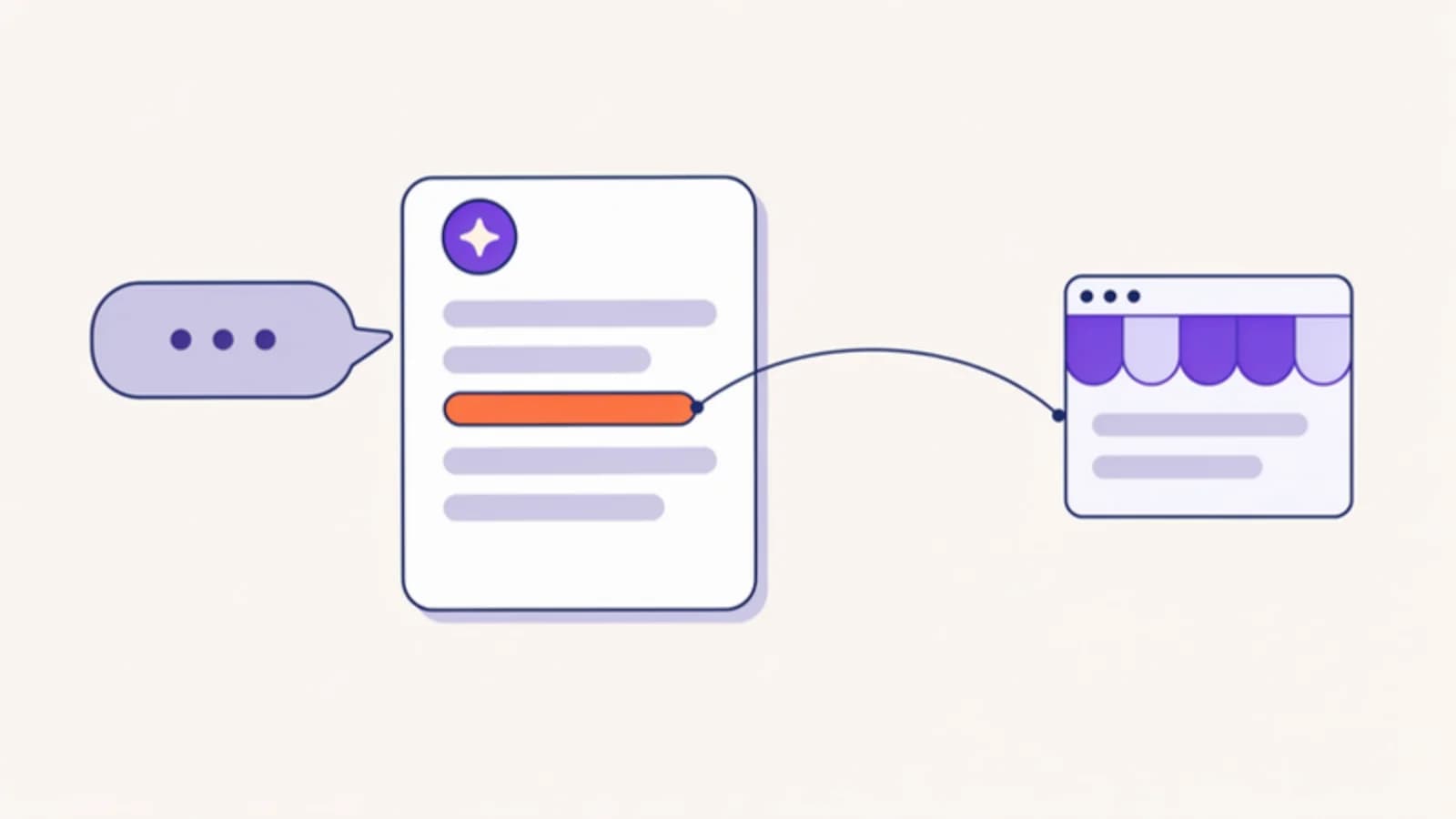
Generative engine optimization (GEO) is the work of making a business or a page more likely to be named and cited inside the answers written by AI systems such as ChatGPT, Perplexity, Gemini, Claude and Google's AI Overviews. A generative engine does not return a list of links: it reads several sources and writes one answer. GEO is about being one of those sources. It is also called AEO, AI search optimization, AI SEO, LLM SEO or LLMO.
- The term comes from a research paper first published in November 2023, in which the best methods raised a source's visibility in generated answers by 30 to 40% in a lab setting [1].
- Google's view of its own AI answers: optimizing for them "is optimizing for the search experience, and thus still SEO" [6].
- No one can promise a citation. OpenAI's wording for ChatGPT search is "Placement is not guaranteed" [8].
- What you measure is how often answers name or link you, across a fixed list of questions and several engines.
Want to know if AI assistants recommend your site? Free scan, about a minute →
A search engine gives you a page of results and lets you choose. A generative engine makes the choice for you: it reads, selects and writes. When a customer asks one "which accountant should I use for a small online shop?", the reply contains a few names and, often, the pages those names came from. GEO is the work of being among them.
I build a tool that measures this, so I have a stake in the subject. Every figure here links to its source at the bottom with the date I opened it, and I say so when a source sells software in the field (Ahrefs, Yext, Similarweb, Conductor). What I could not open and check is not in this guide.
If you prefer video, lesson 1.2 of the free AEO and GEO course explains in three minutes how AI engines choose the sources they cite:
Where the term comes from
"Generative engine optimization" was introduced in a paper titled "GEO: Generative Engine Optimization", by six researchers from Princeton University, IIT Delhi and elsewhere. It was posted in November 2023 and presented at the KDD conference in August 2024 [1].
The authors asked a practical question: if an engine writes its answer from several sources, what makes it use more of one source than another? They built a test set of 10,000 questions, took the top sources for each from Google, and tried nine ways of rewriting a source.
| What they changed on the page | Effect on visibility in the answer |
|---|---|
| Added citations to sources, quotations, or statistics | Relative improvement of 30 to 40% |
| Made the text more fluent or easier to understand | A boost of 15 to 30% |
| Stuffed it with keywords | Little to no improvement |
All three rows are from the paper [1]. One more finding matters for small sites. Citing sources helped lower-ranked pages most: visibility rose by 115.1% for the site ranked fifth, while the site ranked first lost 30.3% on average [1]. In an answer written from several sources, a page with attributable facts can count for more than its position suggests.
The paper has limits, and they are easy to forget when its numbers are quoted. The engine was a simulation built on a language model of the time, with one further test on Perplexity, where the gain was up to 37% [1]. It measured the share of the answer's text taken from a source, not visits or sales. And it predates ChatGPT search and Google's AI Overviews as they work today.
How a generative engine builds an answer
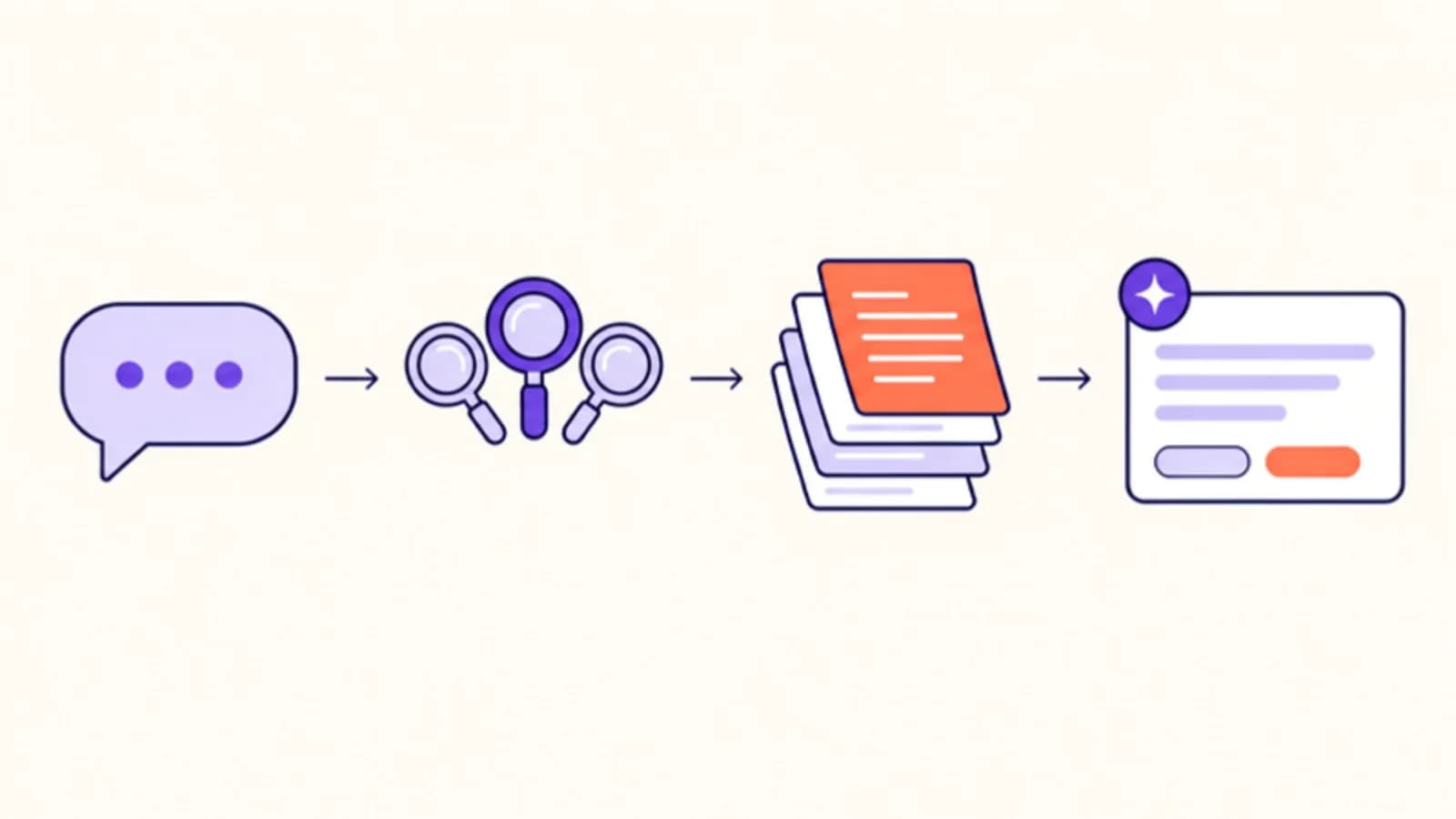
The steps are similar across engines that search the web.
GEO acts on the middle step: being a page the engine can find, read and use.
Google describes its version in its documentation: an AI Overview starts from "the ranked results returned" for the search, the model may run related searches of its own, and the answer links to the pages that support it [7]. OpenAI's description of ChatGPT search is similar: when it works with other search providers, it "typically rewrites your query into one or more targeted queries", and answers that use web search "may include citations" [8].
The consequence for a site owner is that there are three ways to fail before content quality even comes into it. The engine never finds the page. The engine finds it and cannot read it. Or the engine reads it and finds nothing it can lift out and attribute.
Other names for the same work
You will meet at least five other labels. They describe the same thing from slightly different angles.
- AEO, answer engine optimization. The older name, in use since 2018, when "answers" meant Google's featured snippets and voice assistants. Today it is used interchangeably with GEO. The full story is in what AEO is.
- AI search optimization. A plain-language name for GEO.
- AI SEO. This one has two meanings. Sometimes it means GEO. Just as often it means using AI tools to do ordinary SEO work, such as writing or keyword research. Ask which one is meant.
- LLM SEO and LLMO. LLM stands for large language model, the technology behind the assistants. One vendor glossary defines LLMO as "synonymous with GEO but emphasizing the AI model itself" [3].
Wikipedia's entry lists these as other terms for the same concept and notes that usage varies "with no consensus definition" [2]. The name is settling, though. Microsoft's Bing called its AI Performance report "an early step toward Generative Engine Optimization (GEO) tooling" [4], and its webmaster guidelines now mention GEO by name [5].
How GEO relates to classic SEO is its own question, answered in GEO vs SEO vs AEO.
Why it matters now
The audience is real, and it is still smaller than search.
- People use the assistants at scale. OpenAI counted 700 million weekly users of ChatGPT in September 2025 [10] and 1.2 billion in November 2026 [11].
- Google has put AI answers in front of its own users. In June 2026 Google said AI Overviews had more than 2.5 billion monthly users [12].
- Visits to AI platforms are growing fast. Similarweb measured an average of 9.5 billion monthly visits to generative AI platforms between June 2025 and May 2026, 70% more than a year earlier [13].
Now the other side. In Ahrefs' data from 76,000 websites, Google sent 190 times more traffic to websites than ChatGPT did [14]. An assistant answers inside the conversation, so far fewer visits reach websites.
So the value of GEO is less in the visits than in the mention. If the answer to "who should I call" contains three names and yours is not one of them, no analytics report will show you what you lost.
What GEO work consists of
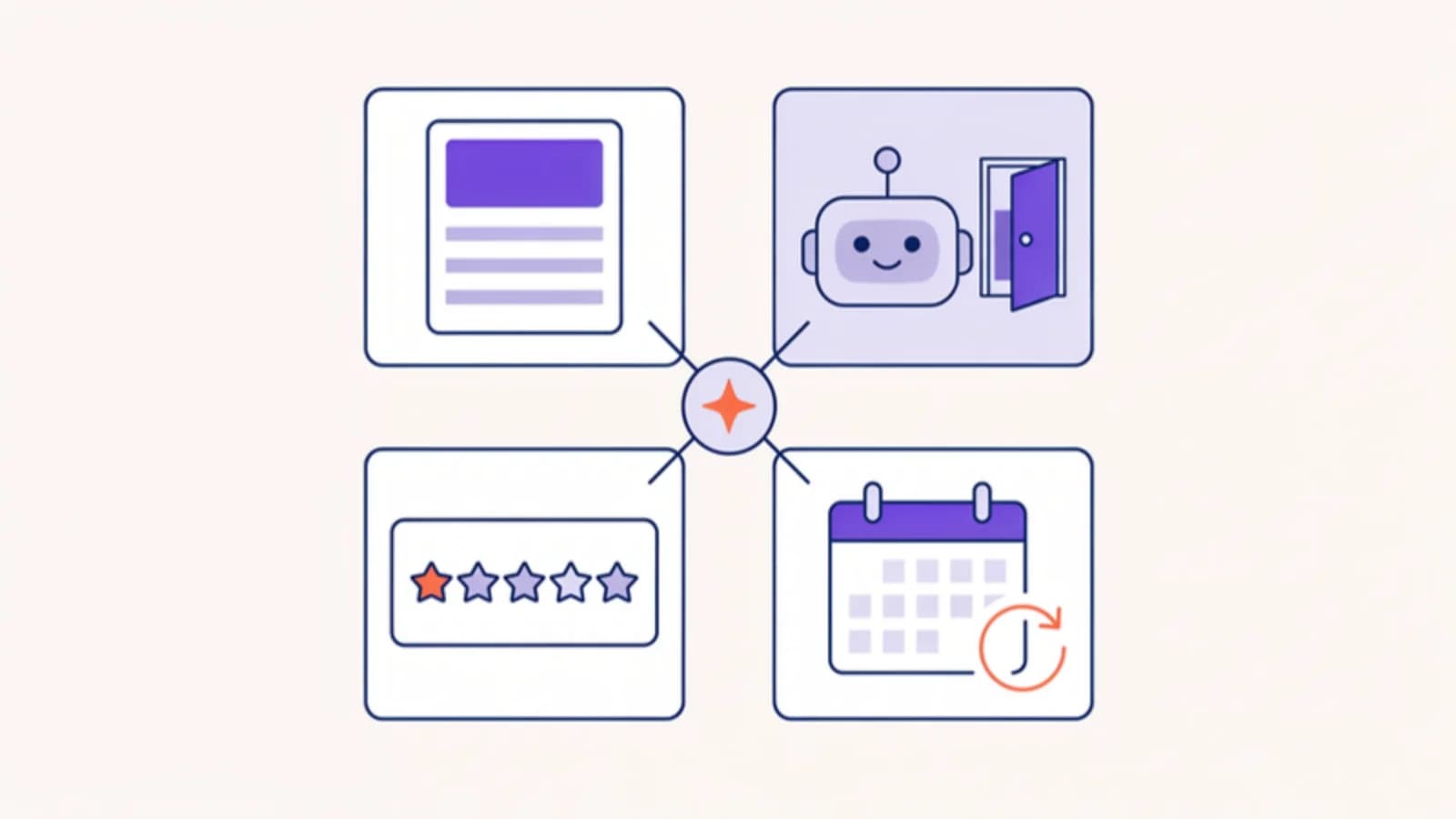
For an ordinary business, the work comes down to five things.
1. Let the AI search crawlers in. OpenAI states that sites that opt out of its search crawler "will not be shown in ChatGPT search answers" [9]. A blocked crawler is the one cause that makes everything else pointless. The rules for each bot are in AI bots: who may read the site.
2. Answer the question at the top, in text. A heading that is the customer's question, the answer in the first lines, then the detail. An engine lifts sentences, and it cannot lift what is buried.
3. Give facts that can be attributed. Numbers with a source and a date, exact names, prices where you can publish them. This is the paper's main finding: sources, quotations and statistics were what moved visibility [1].
4. Keep the same facts everywhere. Yext analyzed 6.8 million citations in answers about brands: 44% of the cited sources were the business's own website and 42% were its listings [16]. Yext sells listings software, and the questions named a brand and a location. The practical point stands: your site, your Google Business Profile and your directory entries should say the same things.
5. Be present where the engines read. Assistants do not read the same sources as Google. In one test, only 12% of the links cited by ChatGPT, Gemini and Copilot were in Google's top 10 for the same question [15]. Review sites, directories and trade publications in your field are part of the picture.
What GEO cannot do
It cannot guarantee anything. OpenAI says so in three words: "Placement is not guaranteed" [8]. Bing's guidelines make the same point about GEO, as reported by Search Engine Journal: it does not guarantee citations, just as SEO does not guarantee rankings [5].
It is not a set of tricks either. Google's guide tells site owners to put effective SEO ahead of what it calls "AEO/GEO hacks", and names three to ignore for Google Search: chunking content, creating unnecessary AI text files, and pursuing inauthentic mentions [6].
And it does not replace SEO. Google's own AI answers are built on its ranking systems, so a page Google cannot index cannot be cited there [7].
How to measure GEO
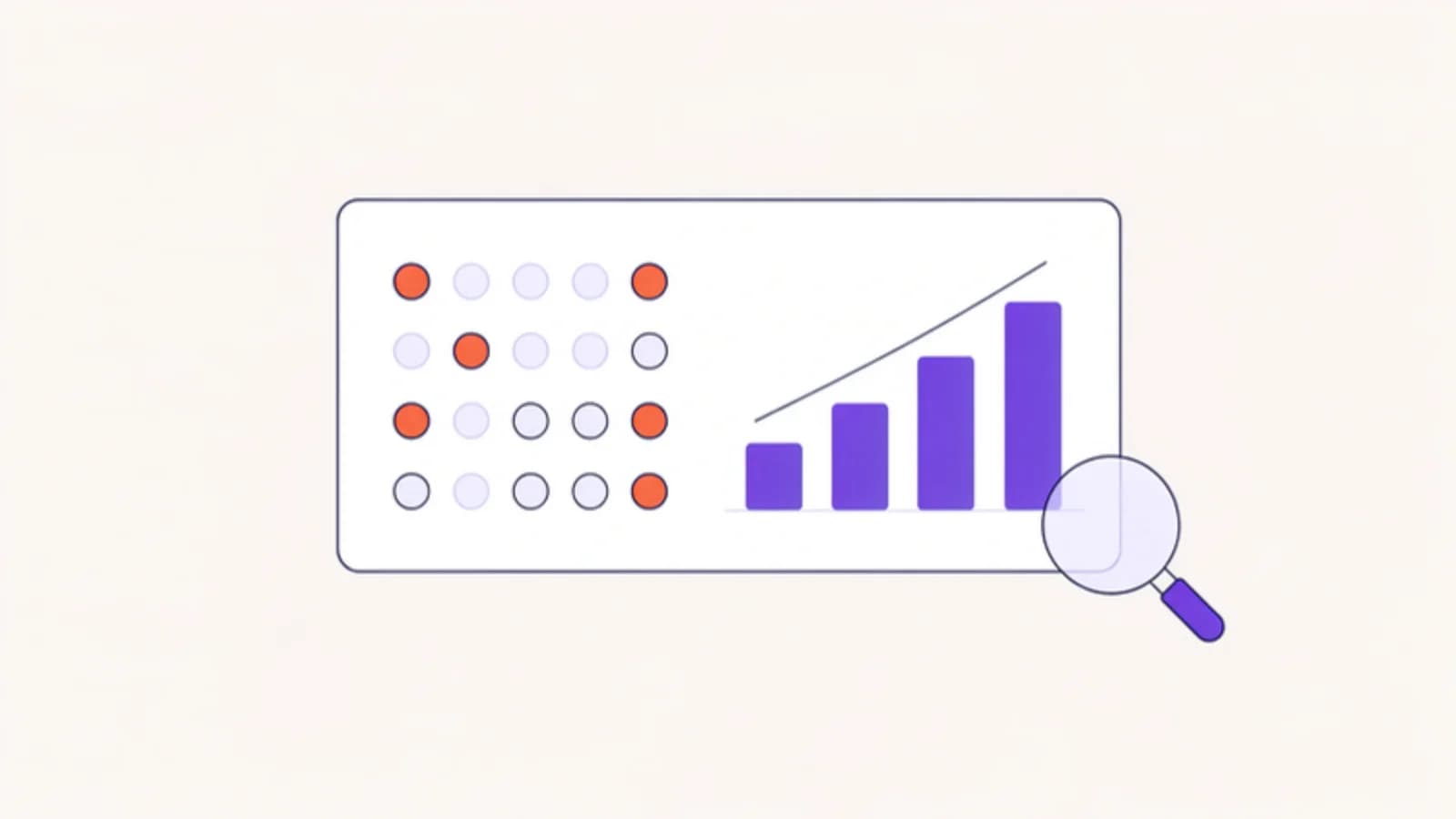
A position does not exist in an AI answer, so the measure is a frequency.
- Fix a list of questions your customers ask, most of them without your name.
- Ask several engines. They draw on different sources.
- Record, for each answer, whether you are named, whether one of your pages is linked, and who is named instead.
- Repeat every month with the same list and compare.
The full method, with a free worksheet, is in how to run an AI visibility audit. The tools that automate it are compared in best AI visibility tools.
The platforms have started to publish their own numbers. Google Search Console reports impressions in AI Overviews and AI Mode [17]. Bing Webmaster Tools has an AI Performance report [4]. Since November 2026, OpenAI shows businesses "the number of mentions and website clicks a business receives" in ChatGPT, in a beta [11]. Each covers its own platform only, and none tells you who was named instead of you.
How CiteProof measures it. It asks the same customer questions at every audit on five engines (ChatGPT, Perplexity, Gemini, Google AI and Claude), saves the sources each answer cited, and shows who was cited instead. After each audit it prepares fixes for the site and re-checks online that each one is live before counting it.
Start with a measurement
The free scan shows whether ChatGPT, Perplexity and Gemini name you on five of your customers' questions. From there you can keep measuring by hand or let the audits run on their own.
A measurement, not a promise: no one can make a citation certain.
Frequently asked questions
What is GEO in simple terms?
It is making sure your business is one of the names an AI assistant gives, and one of the sources it links, when someone asks it a question you could answer.
Is GEO just SEO?
They overlap heavily. Google says that optimizing for its AI answers is still SEO. The differences are in what gets read, which includes listings, reviews and other sites as well as your pages, and in what you measure: how often an answer names you, instead of where you rank.
Is GEO the same as AEO?
In practice, yes. AEO is the older name and GEO the newer one; both describe the work of being cited in AI answers.
Who coined the term generative engine optimization?
Researchers from Princeton University, IIT Delhi and other institutions, in a paper first published in November 2023 and presented at the KDD conference in 2024.
What is AI search optimization?
Another name for GEO: improving the chances that AI search systems, such as ChatGPT search, Perplexity and Google's AI answers, use and cite your content.
Does GEO work?
In the original research, adding sources, quotations and statistics raised a page's visibility in generated answers by 30 to 40% in a lab test. Outside the lab nothing is guaranteed, which is why the first step is to measure where you stand and the second is to measure again after each change.
Is GEO worth it for a small business?
It is worth knowing where you stand. In one large study, most of the sources cited about brands were the business's own website and its listings, which a small business controls. Start with a free check before you spend anything.
Sources
- [1] GEO: Generative Engine Optimization · Aggarwal et al., Princeton University and IIT Delhi (arXiv; KDD 2024) · November 2023, revised June 2024 · accessed 2026-11-25
- [2] Generative engine optimization · Wikipedia · November 2026 · accessed 2026-11-25
- [3] LLMO (Large Language Model Optimization) · Conductor · November 2025 · accessed 2026-11-25
- [4] Introducing AI Performance in Bing Webmaster Tools Public Preview · Microsoft Bing Blogs · February 2026 · accessed 2026-11-25
- [5] Bing Adds GEO To Official Guidelines, Expands AI Abuse Definitions · Search Engine Journal · February 2026 · accessed 2026-11-25
- [6] Google's Guide to Optimizing for Generative AI Features on Google Search · Google Search Central · May 2026 (updated July 2026) · accessed 2026-11-25
- [7] Attribution and Factuality in Search Generative AI Features · Google Search Central · November 2026 · accessed 2026-11-25
- [8] Searching the web with ChatGPT · OpenAI Help Center · 2026 · accessed 2026-11-25
- [9] Overview of OpenAI Crawlers · OpenAI · 2026 · accessed 2026-11-25
- [10] How people are using ChatGPT · OpenAI · September 2025 · accessed 2026-11-25
- [11] Introducing Businesses in ChatGPT · OpenAI · November 2026 · accessed 2026-11-25
- [12] New opportunities, control and insights for website owners · Google, The Keyword · June 2026 (updated August 2026) · accessed 2026-11-25
- [13] AI Search Stats in 2026 · Similarweb · July 2026 · accessed 2026-11-25
- [14] ChatGPT Has 12% of Google's Search Volume but Google Sends 190x More Traffic to Websites · Ahrefs · 2025 · accessed 2026-11-25
- [15] Only 12% of AI Cited URLs Rank in Google's Top 10 for the Original Prompt · Ahrefs · August 2025 · accessed 2026-11-25
- [16] AI Doesn't Rank, It Cites. And 86% of Its Sources Are Brand-Managed · Yext · October 2025 · accessed 2026-11-25
- [17] Generative AI performance report (Search) · Google Search Console Help · 2026 · accessed 2026-11-25
Read next
- AEO · Answer Engine OptimizationWhat Is AEO? Answer Engine Optimization Explained
- GEO and AEO · FundamentalsGEO vs SEO vs AEO: What Is the Difference?
- AEO · Google AI OverviewsHow to Appear in Google AI Overviews (2026 Guide)
CiteProof tracks your brand's visibility across AI answer engines and tells you what to change to get cited. With one rule: the score only moves up after the Verify Bot confirms the fix is actually live.